
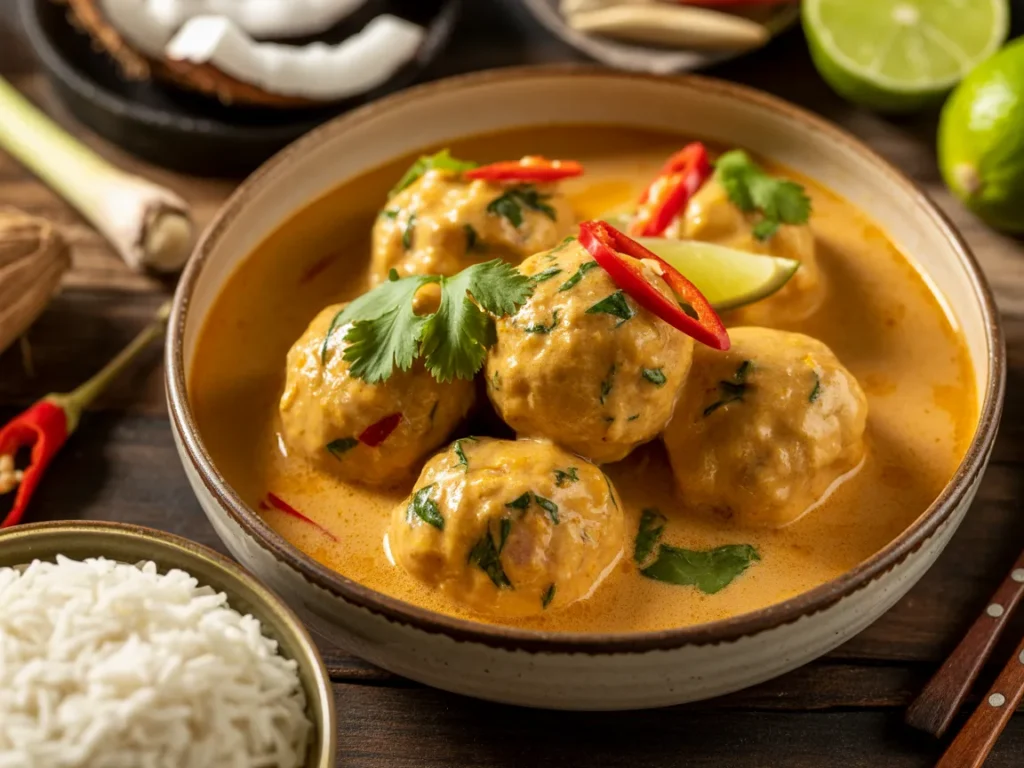
Thai coconut curry chicken meatballs represent a delicious fusion of traditional Thai flavors with the convenience of a modern comfort food. These aromatic, tender meatballs have become a favorite among home cooks and food enthusiasts who appreciate authentic Asian cuisine with a contemporary twist. Whether you’re planning a weeknight dinner, preparing appetizers for guests, or meal prepping for the week ahead, these meatballs deliver incredible flavor and satisfaction.
What Makes Thai Coconut Curry Chicken Meatballs Special?
The appeal of Thai coconut curry chicken meatballs lies in their perfect balance of flavors and textures. Unlike traditional beef or pork meatballs, chicken offers a lighter, more delicate base that absorbs the vibrant Thai spices beautifully. The combination of creamy coconut milk with aromatic curry paste creates a sauce that’s both comforting and sophisticated.
These meatballs capture the essence of Thai cuisine—a harmonious blend of sweet, salty, sour, and spicy elements. The coconut provides richness and subtle sweetness, while the curry paste contributes depth and complexity. Fresh herbs and aromatics round out the profile, creating a dish that’s far more interesting than standard meatballs.
Key Ingredients for Perfect Thai Coconut Curry Chicken Meatballs

Creating exceptional Thai coconut curry chicken meatballs requires quality ingredients. Ground chicken serves as the foundation—opt for a mixture that includes some dark meat for enhanced flavor and moisture. The meatballs themselves benefit from breadcrumbs, egg, garlic, ginger, and fish sauce, which are essential to authentic Thai cooking.
For the curry sauce, you’ll need coconut milk, curry paste (red, yellow, or green depending on your heat preference), and fresh ingredients like lime juice, cilantro, and Thai basil. Additional components might include bell peppers, snap peas, and bamboo shoots for texture and nutrition.
The quality of your curry paste significantly impacts the final dish. Thai curry pastes contain a complex blend of chilies, garlic, lemongrass, galangal, and other aromatics. Using authentic Thai curry paste rather than generic curry powder ensures authentic flavor that truly distinguishes these meatballs.
Step-by-Step Preparation Guide
Making the Meatballs:
Begin by combining ground chicken with minced garlic, fresh ginger, fish sauce, and breadcrumbs in a large bowl. Add an egg to bind the mixture and incorporate fresh cilantro for brightness. Season with salt and white pepper. Mix gently—overworking the mixture results in dense, tough meatballs. Form into uniform balls approximately one inch in diameter.
Heat oil in a large skillet over medium-high heat. Working in batches to avoid crowding, brown the meatballs on all sides until golden. This step develops flavor through the Maillard reaction, even though the meatballs won’t be fully cooked at this stage. Transfer browned meatballs to a plate.
Creating the Coconut Curry Sauce:
In the same skillet, add diced onions and cook until softened. Stir in your chosen curry paste, allowing it to bloom in the oil for about one minute. This releases the essential oils and intensifies the flavors. Gradually pour in coconut milk, stirring constantly to create a smooth sauce.
Add the browned meatballs back to the skillet, along with any accumulated juices. Bring the mixture to a gentle simmer and cook for 12-15 minutes, allowing the meatballs to cook through completely. The internal temperature should reach 165°F (74°C).
During the final minutes of cooking, add your chosen vegetables—bell peppers, snap peas, or bamboo shoots work beautifully. Finish with fresh lime juice, which brightens the rich curry sauce and adds necessary acidity.

Flavor Profile and Taste Experience
Thai coconut curry chicken meatballs offer a multidimensional taste experience. The initial bite reveals the tender, juicy meatball interior, infused with aromatic spices. The creamy coconut sauce coats your palate with richness, while the curry paste provides warmth and complexity.
The heat level depends on your curry paste selection. Red curry paste typically offers moderate spice, yellow curry is milder and slightly sweeter, while green curry delivers more intense heat. You can adjust spiciness by controlling the amount of paste or balancing it with additional coconut milk.
Fresh lime juice and herbs provide essential brightness, preventing the dish from feeling heavy. The combination of textures—tender meatballs, creamy sauce, and crisp vegetables—keeps each bite interesting.
Serving Suggestions and Pairings
Thai coconut curry chicken meatballs are incredibly versatile. Serve them over jasmine rice to soak up the flavorful sauce, or pair with rice noodles for a lighter option. Cauliflower rice offers a low-carb alternative for health-conscious diners.
These meatballs also work wonderfully as appetizers. Serve them on toothpicks with a small bowl of sauce for dipping at parties and gatherings. They’re equally at home on a bed of fresh greens as a protein-rich salad component.
For a complete Thai meal experience, accompany the meatballs with complementary dishes like spring rolls, cucumber salad, or Thai-style green papaya salad. A crisp white wine, such as Sauvignon Blanc or Pinot Grigio, pairs beautifully with the rich, spiced sauce.
Meal Prep and Storage Benefits
One reason Thai coconut curry chicken meatballs become a weekly craving is their excellent meal prep potential. Prepare a large batch on Sunday and portion into containers for grab-and-go lunches throughout the week. The flavors actually improve as they sit, allowing the spices to meld and deepen.
Store cooked meatballs in an airtight container in the refrigerator for up to four days. They reheat beautifully—simply warm gently in a skillet or microwave, adding a splash of water or coconut milk if needed. You can also freeze uncooked meatballs on a baking sheet, then transfer to freezer bags for up to three months. Cook directly from frozen, adding a few extra minutes to the simmering time.
Nutritional Advantages
Ground chicken provides lean protein, making Thai coconut curry chicken meatballs a nutritionally balanced option. Chicken breast contains approximately 31 grams of protein per 100 grams, supporting muscle maintenance and satiety.

Coconut milk, while calorie-dense, contains medium-chain triglycerides (MCTs) that some research suggests may support metabolism. The curry paste contributes beneficial compounds from turmeric, which contains curcumin—a compound with potential anti-inflammatory properties.
Fresh herbs and lime juice add vitamins, minerals, and antioxidants without significant calories. The vegetables included in the sauce provide fiber, vitamins, and phy
Thai Coconut Curry Chicken Meatballs: A Weekly Craving You Can’t Resist
Thai coconut curry chicken meatballs have become a beloved staple in kitchens around the world, combining the aromatic spices of Southeast Asia with the comfort of a classic meatball. These delightful spheres of flavor offer a perfect balance of creamy, spicy, and savory notes that make them impossible to enjoy just once. Whether you’re planning a weeknight dinner, preparing appetizers for guests, or looking for meal prep options, Thai coconut curry chicken meatballs deliver consistent satisfaction that keeps you coming back week after week.
Understanding the Appeal of Thai Coconut Curry Chicken Meatballs
The popularity of Thai coconut curry chicken meatballs stems from their versatility and the harmonious blend of ingredients that define Thai cuisine. Unlike traditional meatballs that rely heavily on breadcrumbs and cheese, Thai coconut curry chicken meatballs incorporate fresh herbs, aromatic spices, and coconut milk, creating a more complex and sophisticated flavor profile.
The beauty of these meatballs lies in their ability to satisfy multiple culinary preferences. They’re gluten-free when prepared without breadcrumbs, naturally lower in calories compared to beef meatballs, and packed with lean protein from chicken. The coconut curry sauce adds richness without overwhelming the palate, while the Thai spices provide depth and warmth that lingers pleasantly.
The Key Components of Thai Coconut Curry Chicken Meatballs
The Meatball Base
The foundation of exceptional Thai coconut curry chicken meatballs begins with quality ground chicken. Ground chicken breast is ideal for those watching fat intake, though a mixture of breast and thigh meat provides superior moisture and flavor. When preparing the meatball mixture, combining ground chicken with minced garlic, fresh ginger, and Thai red curry paste creates an intensely flavorful base.
Additional ingredients that elevate the meatballs include fresh cilantro, lime zest, and finely minced lemongrass. These components introduce the bright, citrusy notes characteristic of Thai cuisine. For binding, instead of traditional breadcrumbs, many recipes use almond flour or simply rely on the natural binding properties of the chicken and egg.
The Coconut Curry Sauce
The sauce is where Thai coconut curry chicken meatballs truly shine. A proper sauce combines full-fat coconut milk with curry paste—typically red, yellow, or green curry paste depending on your heat preference. The coconut milk provides a creamy base that mellows the spice while adding subtle sweetness and richness.
Fish sauce is an essential ingredient that might seem unusual but provides umami depth without making the dish taste fishy. A squeeze of fresh lime juice brightens the sauce, while brown sugar balances the heat and saltiness. Some recipes include additional vegetables like bell peppers, bamboo shoots, or Thai eggplant, which add texture and nutritional value.

How to Make Thai Coconut Curry Chicken Meatballs at Home
Preparation Steps
Creating Thai coconut curry chicken meatballs at home is surprisingly straightforward. Begin by combining one pound of ground chicken with two tablespoons of red curry paste, two minced garlic cloves, one tablespoon of minced fresh ginger, and a quarter cup of fresh cilantro. Add one egg, the zest of one lime, and season with salt and pepper.
Mix these ingredients gently until just combined—overworking the mixture results in dense, tough meatballs. Using slightly damp hands, form the mixture into balls approximately one and a half inches in diameter. Aim for consistency in size to ensure even cooking.
Cooking Methods
Pan-searing is the most popular method for cooking Thai coconut curry chicken meatballs. Heat two tablespoons of coconut oil in a large skillet over medium-high heat. Working in batches to avoid overcrowding, cook the meatballs for six to eight minutes, turning occasionally until they develop a golden-brown exterior and reach an internal temperature of 165°F.
Alternatively, baking Thai coconut curry chicken meatballs in a preheated 400°F oven for fifteen minutes produces excellent results with less hands-on attention. Simply arrange them on a parchment-lined baking sheet and bake until cooked through.
Sauce Preparation
While the meatballs cook, prepare the sauce by heating one tablespoon of coconut oil in a separate pan. Add two tablespoons of red curry paste and cook for one minute, stirring constantly to release the aromatic compounds. Pour in one can of full-fat coconut milk, stirring until the curry paste fully incorporates.
Add one tablespoon of fish sauce, one tablespoon of brown sugar, and the juice of one lime. Bring the mixture to a gentle simmer, then add the cooked meatballs. Allow them to simmer in the sauce for five to ten minutes, allowing the flavors to meld. Taste and adjust seasonings as needed—you may want additional lime juice for brightness or fish sauce for deeper umami.
Serving Suggestions for Thai Coconut Curry Chicken Meatballs
Traditional Pairings
Thai coconut curry chicken meatballs pair beautifully with jasmine rice, which absorbs the flavorful sauce and provides a neutral base that lets the meatballs shine. Alternatively, serve them over rice noodles for a lighter option, or with cauliflower rice for a lower-carbohydrate alternative.
Coconut rice—prepared by cooking jasmine rice in coconut milk instead of water—creates a luxurious accompaniment that echoes the meatballs’ creamy sauce. This pairing is particularly impressive when entertaining guests.
Appetizer Presentations
For entertaining, serve Thai coconut curry chicken meatballs as appetizers by placing them on small skewers or toothpicks with the sauce available for dipping. This presentation makes them easy to eat while mingling and creates an impressive display that guests will remember.

Alternatively, serve them in a slow cooker on the warm setting, allowing guests to help themselves throughout an event. This method keeps the meatballs at the perfect temperature while freeing you to attend to other hosting duties.
Vegetable Accompaniments
Fresh vegetables provide textural contrast and nutritional balance. Serve Thai coconut curry chicken meatballs alongside steamed bok choy, sautéed snap peas, or roasted broccoli. A simple cucumber salad with rice vinegar and a touch of sugar offers refreshing relief from the rich sauce.
Thai basil, when available, makes an exceptional garnish that adds aromatic complexity. Fresh cilantro and sliced red chilies also enhance the presentation while providing additional flavor layers.
Nutritional Benefits of Thai Coconut Curry Chicken Meatballs
Thai coconut curry chicken meatballs offer impressive nutritional profiles that make them suitable for various dietary approaches. Chicken provides lean protein essential for muscle maintenance and satiety. A typical serving contains approximately 20-25 grams of protein, making these meatballs an excellent choice for those prioritizing protein intake.
The coconut milk, while containing fat, provides medium-chain triglycerides (MCTs) that some research suggests may support metabolism and provide sustained energy. The fresh herbs and spices contribute antioxidants and anti-inflammatory compounds without adding significant calories.
For those managing carbohydrate intake, Thai coconut curry chicken meatballs can easily fit into low-carb or ketogenic diets when served with cauliflower rice or simply with sauce and vegetables, omitting the rice entirely.
Meal Prep and Storage Considerations
One reason Thai coconut curry chicken meatballs become a weekly craving is their excellent suitability for meal preparation. The meatballs can be formed and refrigerated for up to 24 hours before cooking, allowing you to prepare them during a convenient time and cook them when ready.
Cooked Thai coconut curry chicken meatballs store beautifully in the refrigerator for up to four days when kept in an airtight container. The flavors actually intensify as they sit, making them even more delicious on day three or four than when freshly prepared.
For freezing, allow the meatballs and sauce to cool completely, then transfer to freezer-safe containers where they’ll keep for up to three months. Thaw overnight in the refrigerator and reheat gently on the stovetop or in the microwave, adding a splash of coconut milk if the sauce has thickened too much.
Variations and Customizations
The basic formula for Thai coconut curry chicken meatballs allows for numerous variations based on personal preferences and ingredient availability. Green curry paste creates a slightly more herbaceous version, while yellow curry paste offers milder heat and more turmeric warmth.
