
Key Takeaways
Pumpkin Spice Tiramisu brings together creamy mascarpone, coffee-soaked ladyfingers, pumpkin purée, and autumn spices in a dessert that feels special without demanding a complicated bake.
- Use pumpkin purée sparingly enough to keep the mascarpone filling light.
- Let the coffee mixture cool before dipping the ladyfingers.
- Dip each cookie briefly so the layers soften without collapsing.
- Chill the assembled tiramisu for clean slices and deeper flavor.
- Add cocoa just before serving for the freshest finish.
What makes pumpkin spice tiramisu different
Pumpkin Spice Tiramisu takes the familiar architecture of tiramisu and gives it a soft, seasonal turn. The coffee remains present, but pumpkin, cinnamon, ginger, and nutmeg add a rounder, warmer finish. It is a lovely project for anyone who enjoys the practical side of cooking as much as the pleasure of sharing dessert.
How pumpkin changes the classic tiramisu
Traditional tiramisu depends on mascarpone, coffee, cocoa, and ladyfingers for its character. Pumpkin purée adds color, gentle sweetness, and a little extra moisture, so the filling needs enough structure to remain spoonable rather than loose. Choose plain pumpkin purée, not pumpkin pie filling, since the latter already contains sugar and seasoning.
The pumpkin should support the mascarpone rather than overwhelm it. A moderate amount keeps the cream airy and lets the coffee still taste like coffee. That balance is what makes this dessert feel like tiramisu with an autumn accent instead of pumpkin pie in a different dish.
Balancing pumpkin, coffee, and warm spices
Coffee gives the dessert its pleasantly bitter backbone, while pumpkin rounds out the edges. Warm spices should sit between those two flavors, not cover them. Start with a modest amount of pumpkin spice, then taste the filling after it has rested for a few minutes; cinnamon and ginger often become more noticeable as they bloom.
For another perspective on the same flavor path, explore this Pumpkin Spice Latte Tiramisu, where coffee and pumpkin are treated as natural partners. Here, a little cocoa on top adds a dark, lightly bitter finish that keeps every spoonful from feeling too sweet.

Choosing between a no-bake and egg-based filling
A no-bake filling made with mascarpone and whipped cream is the simplest route. It is quick to assemble, easy to portion, and especially useful when the oven is already busy with other dishes. An egg-based filling can taste richer, but it requires more care with temperature and handling.
If using egg yolks, cook them gently with sugar over simmering water until thickened, then cool the mixture before adding mascarpone. Whichever method you choose, the goal is the same: a filling that is creamy, stable, and light enough to sit comfortably between softened cookies.
What to expect from the finished texture
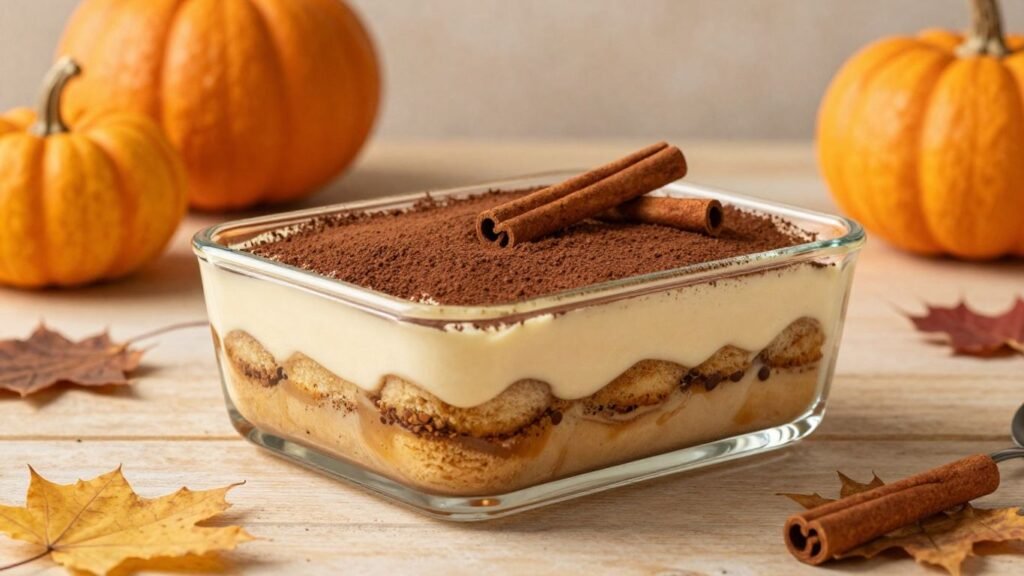
After chilling, the top should feel softly set while the center remains creamy. The ladyfingers absorb coffee and a little of the pumpkin cream, becoming tender without turning into paste. A clean slice is possible when the layers are even and the dessert has had enough time in the refrigerator.
This is not a firm cake, and it should not be treated like one. Serve it cold, with a spoon or a thin dessert spatula, and expect a delicate contrast between velvety cream and yielding cookies.
Ingredients and equipment for the recipe
The ingredient list is short, but each part has a job. Mascarpone supplies richness, whipped cream brings lift, pumpkin gives the filling its seasonal identity, and ladyfingers create the soft cake-like layers. Chefworx approaches recipes as invitations to explore, so this is a good place to notice how a few familiar ingredients create a completely different flavor experience.
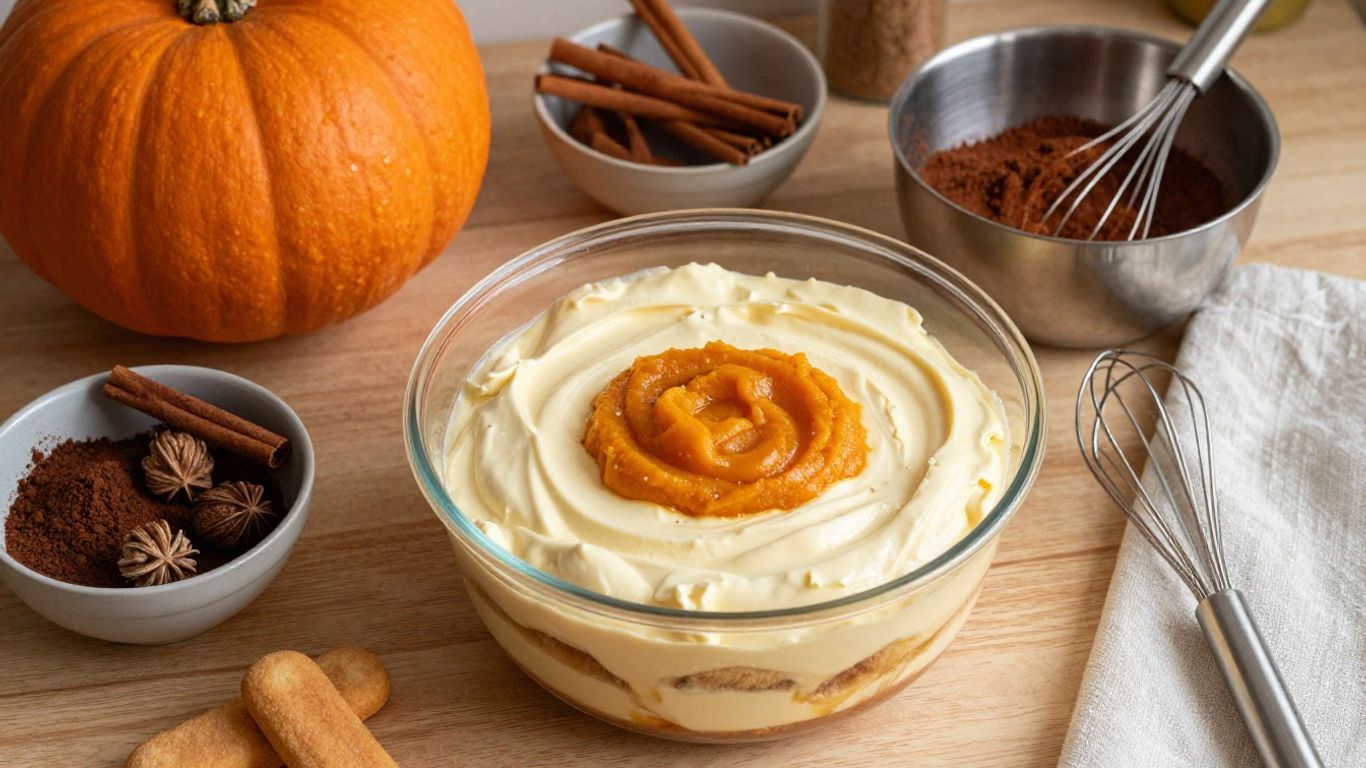
Mascarpone, cream, and pumpkin purée
Use full-fat mascarpone for the smoothest texture, and keep it cool but not rock-hard before mixing. Heavy cream should also be cold so it whips efficiently. Plain canned pumpkin purée is convenient and consistent, though a smooth homemade squash purée can work if it is thick and not watery.
A practical starting point for one medium dish is mascarpone, heavy cream, pumpkin purée, granulated or powdered sugar, and vanilla. The exact quantity can shift with the dish size, but the filling should taste creamy first, pumpkin-forward second.
Ladyfingers and the coffee dipping mixture
Dry ladyfingers are ideal because they absorb liquid quickly while retaining enough shape to form a layer. Brew strong coffee or espresso, sweeten it lightly if desired, and let it cool fully. A splash of dark rum or bourbon is optional, but the dessert remains satisfying without alcohol.
The coffee mixture should be flavorful rather than syrupy. If it tastes too bitter on its own, a little sugar can soften it; if it is overly sweet, the finished tiramisu may lose the pleasant contrast between coffee, cream, and cocoa.
Pumpkin spice and optional flavor additions
Pumpkin spice usually combines cinnamon, ginger, nutmeg, and sometimes cloves or allspice. Use a prepared blend for convenience, or make a small custom mixture to control the sharper notes. Vanilla is a natural addition, while orange zest can bring a fresh lift to a particularly rich filling.
For a more traditional holiday direction, this coffee and bourbon version offers a useful flavor idea. Keep any added alcohol restrained, since its aroma becomes more apparent after chilling.
Recommended dish sizes and essential tools
A square or rectangular dish around 8 inches by 8 inches works well for two cookie layers and a generous cream layer. A larger dish makes thinner layers, while small glasses or jars make individual servings. You will also want a mixing bowl, hand or stand mixer, rubber spatula, shallow dipping dish, and fine-mesh sieve for cocoa.
The dish size affects more than appearance. A deep container gives a taller, softer dessert, while a broad one increases the proportion of coffee-soaked cookie in each serving. Choose based on whether you want neat slices or easy scooping.
How to make the pumpkin mascarpone filling
The filling determines whether the dessert feels lush or heavy. Work with cool ingredients, mix only as much as needed, and pause to taste before assembling. Chefworx is built around practical culinary learning, and this is one of those recipes where a few small technique choices make a visible difference.
Preparing the spiced pumpkin base
Stir the pumpkin purée with sugar, vanilla, and pumpkin spice until smooth. If the purée seems watery, spread it briefly in a saucepan over low heat to remove some moisture, then cool it completely before combining it with mascarpone. Warm pumpkin can soften the dairy and make the final filling slack.
Taste the base before adding the whipped cream. It should be a touch more spiced and sweet than you expect because the plain cream will soften its intensity. Avoid adding a large amount of liquid flavoring at this stage.
Whipping the cream to the right consistency
Whip the cold heavy cream until it forms medium to firm peaks. The whisk should leave clear trails, but the cream should still look smooth and satiny. Stop before it becomes grainy; overwhipped cream will be harder to fold evenly and can give the filling a slightly coarse texture.
If your kitchen is warm, chill the bowl and beaters for a few minutes first. This small step helps the cream hold its shape and gives you more time to fold without rushing.
Folding the mascarpone mixture without deflating it
Blend the mascarpone into the cooled pumpkin base until smooth, then fold in the whipped cream in two or three additions. Use a broad spatula and sweep from the bottom of the bowl upward, turning the mixture rather than stirring it forcefully. The aim is to distribute the cream while preserving as much air as possible.
A few pale streaks after the first addition are fine. The later folds will even out the color. Stop as soon as the mixture looks uniform, because a light hand matters more here than prolonged mixing.
Adjusting sweetness and spice before assembly
Taste the finished filling with a clean spoon. Pumpkin varies in sweetness, and mascarpone can taste more or less tangy from one container to the next, so this is your chance to make a small adjustment. Add sugar in tiny amounts and give the spice a moment to settle before adding more.
The filling should taste balanced on its own, but not intensely sweet. The ladyfingers and cocoa will contribute their own flavors, and chilling will make the whole dessert seem slightly less sweet than it did at room temperature.
How to assemble the tiramisu
Assembly is mostly about speed and restraint. The cookies need enough coffee to soften, but not so much that they collapse before the cream reaches them. Build each layer with care, then smooth the top so the finished dessert looks composed rather than crowded.
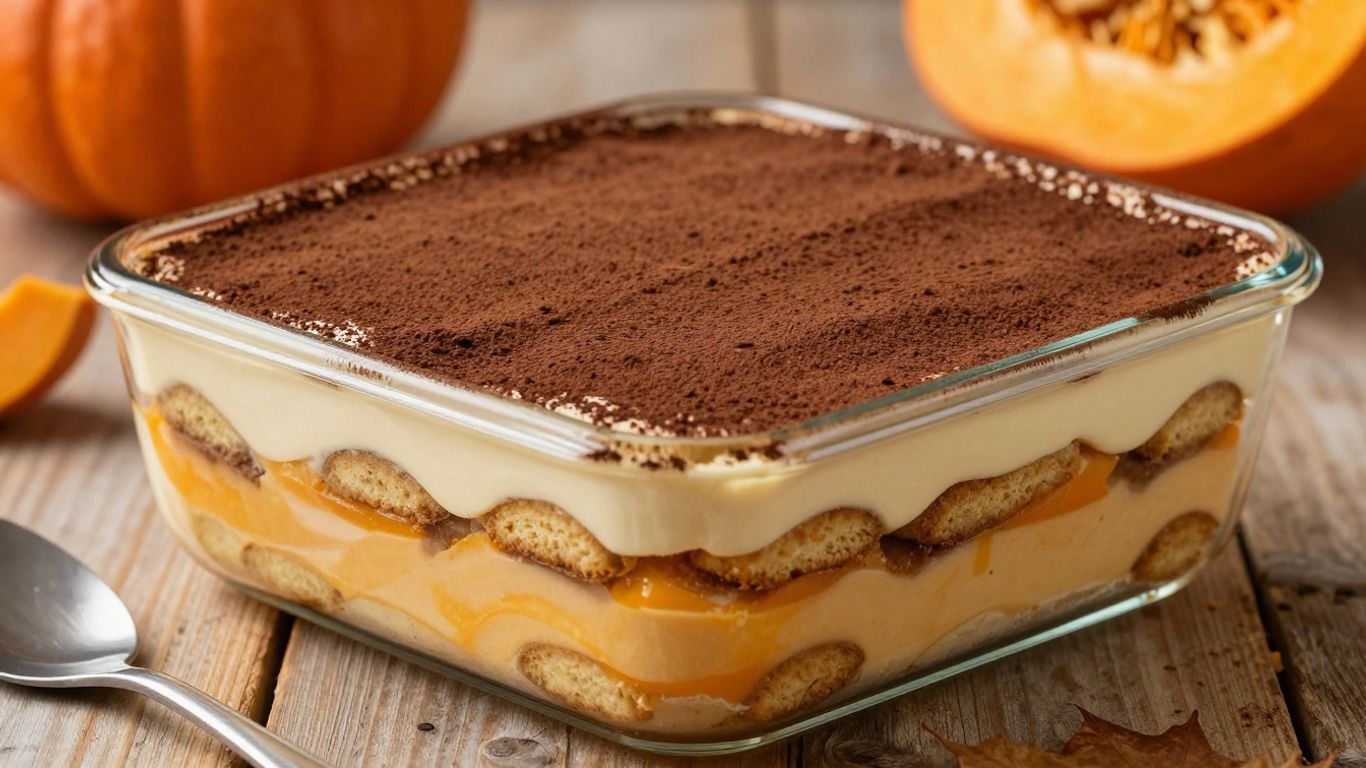
Dipping ladyfingers without making them soggy
Pour the cooled coffee mixture into a shallow dish. Dip each ladyfinger for only a moment on each side, or brush the mixture over the cookie if it seems especially delicate. Place it in the dish immediately, leaving as little time as possible between dipping and layering.
A useful rhythm is to dip, turn, and place. Do not soak the entire batch in advance. The cookies continue absorbing moisture as the tiramisu chills, so a brief dip at the start usually produces the right texture later.
Layering the cookies, pumpkin cream, and cocoa
Arrange the dipped ladyfingers in a snug single layer, trimming them if necessary to fill obvious gaps. Spread over half of the pumpkin mascarpone filling, taking it all the way to the edges. A light dusting of cocoa between layers is optional, but it adds a gentle chocolate note.
Repeat with the remaining ladyfingers and filling. Try not to press down hard, since compression pushes out the air in the cream and can force moisture into the cookies unevenly.
Building individual jars or a large serving dish
A large dish is convenient for a family-style dessert and makes the layers easy to see when served from the side. Individual glasses or jars are tidier for parties, since each guest receives a finished portion without slicing. This pumpkin tiramisu in a jar is a helpful presentation direction when you want the dessert to feel especially festive.
For jars, break the ladyfingers into pieces that fit without forcing them into place. Add a small layer of cookie, cream, and another cookie layer, adjusting the amount according to the height of each vessel. Leave a little room at the top for cocoa or whipped cream.
Creating an even top layer for finishing
Spoon the final cream layer over the cookies, then use an offset spatula or the back of a spoon to smooth it. Work gently from the center toward the edges. A level surface makes the cocoa look more even and helps each portion hold its shape.
Do not worry about making the top perfectly sharp. A softly rippled surface catches the cocoa beautifully and suits the relaxed character of a homemade dessert.
Chilling, setting, and serving
The refrigerator is part of the recipe, not an afterthought. Time allows the coffee to move through the ladyfingers and gives the pumpkin mascarpone filling a firmer, more cohesive texture. Plan the rest of the meal around that quiet setting period.
Minimum chilling time for clean layers
Chill the assembled tiramisu for at least 6 hours, though an overnight rest usually gives the best texture. Cover the dish loosely or with a lid so the cream does not pick up refrigerator aromas. Keep it level while it sets.
If you serve it too soon, the filling may feel loose and the cookies may remain dry in their centers. A full night allows the flavors to blend and makes the dessert easier to portion.
When to add cocoa and other toppings
Dust cocoa over the top shortly before serving. Adding it too early can make the surface damp and uneven, especially if the dish is tightly covered. A fine-mesh sieve creates a thin, elegant layer rather than heavy patches.
You can finish with grated chocolate, a pinch of cinnamon, or a few roasted pumpkin seeds. Keep the topping restrained so it adds texture without obscuring the pumpkin cream.
Slicing and serving the tiramisu neatly
Use a thin knife or dessert spatula and wipe it clean between portions. Cut straight down through the layers rather than dragging across the top. Individual jars need no cutting, but a small spoon still helps preserve the visible layers.
Serve the tiramisu cold, and return unused portions to the refrigerator promptly. If the dessert has softened slightly after sitting out, it will still taste wonderful, though the layers may be less defined.
Pairing ideas for fall gatherings
Serve small portions after a meal with roasted vegetables, braised dishes, or a simple cheese course. Coffee, black tea, and lightly spiced chai all echo the dessert’s warm notes. For wine, a gently sweet late-harvest style can work, while a dry sparkling wine provides refreshing contrast.
The best pairing is often something uncomplicated. Pumpkin Spice Tiramisu already carries several aromatic flavors, so the drink should complement rather than compete with it.
Variations and ingredient substitutions
This dessert is flexible enough to adapt to a mixed table. You can change the coffee, use a different cookie, or divide the recipe into smaller servings without losing its essential character. Think of the original version as a framework for your own flavorful escapade.
Making pumpkin spice latte tiramisu
For a latte-inspired version, add a little extra coffee character to the dipping mixture and keep the pumpkin cream softly spiced. A thin layer of lightly sweetened whipped cream on top can suggest the foam of a latte without making the dessert too heavy.
Avoid adding too much instant coffee directly to the filling, since concentrated granules can taste harsh. Dissolve a small amount in a teaspoon of warm liquid, cool it, and blend it into the pumpkin base if a stronger coffee note is wanted.
Using gluten-free or dairy-free ingredients
Gluten-free ladyfingers can replace standard ones when available, though their absorbency varies, so test one cookie in the coffee mixture first. For a dairy-free version, use plant-based mascarpone-style cheese and a whipping product that holds firm peaks.
Read labels carefully, especially for prepared cookies and spice blends. The texture may be a little different from the classic, but careful chilling and gentle assembly can still produce attractive layers.
Replacing espresso, coffee, or alcohol
Strong brewed coffee is a practical substitute for espresso. Decaffeinated coffee works well when the dessert is served late, and chicory coffee can offer a deeper, toasted note. For an alcohol-free version, simply leave out the rum or bourbon; vanilla and a little extra coffee provide plenty of aroma.
If using alcohol, add it to the cooled dipping mixture rather than pouring it directly over the cookies. That makes the flavor easier to distribute and prevents one section from becoming noticeably stronger than another.
Adjusting the recipe for individual portions
For individual servings, use small glasses with straight sides so the layers remain visible. Break the ladyfingers to fit, then divide the cream evenly by weight or with a spoonful count. Smaller portions also chill faster, though they still benefit from several hours in the refrigerator.
For a gathering, prepare a few extra portions in case the cookie pieces do not fit neatly. Individual desserts are forgiving because small irregularities disappear into the layered presentation.
Troubleshooting and storage
Most problems with tiramisu come from excess moisture, warm ingredients, or insufficient chilling. Fortunately, the signs are easy to read once you know what to look for. Chefworx is interested in the stories behind dishes as well as their techniques, and this dessert rewards that same habit of paying attention to small details.
Preventing runny mascarpone filling
Use thick pumpkin purée and cold heavy cream, and cool any cooked egg mixture before combining it with mascarpone. Overmixing mascarpone can loosen it, while underwhipped cream will not provide enough structure. If the finished filling looks soft, chill it briefly before assembly rather than adding a large amount of extra sugar.
A filling that is slightly loose before assembly may firm during chilling, but a fluid filling will usually make the ladyfingers soggy. It is better to correct the texture early than hope refrigeration will solve everything.
Fixing soggy or dry ladyfingers
Soggy ladyfingers usually mean they were dipped too long or the coffee mixture was too warm and plentiful. If they are dry, the dip was too brief or the cookies were unusually thick. For the next batch, adjust the dipping time by a second or two rather than dramatically changing the recipe.
Layering the cookies snugly also helps distribute moisture. If a few edges remain dry, the cream will soften them as the dessert rests overnight.
Storing leftovers safely in the refrigerator
Cover leftovers and refrigerate them promptly. They are best enjoyed within a few days, while the cream still tastes fresh and the cookies retain a pleasant texture. Always use a clean serving utensil rather than returning a used spoon to the dish.
The cocoa may darken or become damp over time, but that affects appearance more than flavor. A fresh dusting just before serving can brighten the surface.
Making the dessert ahead for holidays and entertaining
Prepare the tiramisu the day before serving, keeping the final cocoa dusting for the last moment. This schedule frees the oven and counters for other dishes and gives the layers time to settle. Individual jars can be covered and arranged on a tray for easy transport.
If carrying the dessert elsewhere, keep it cold in an insulated bag and avoid stacking heavy items on top. A level journey helps preserve the smooth cream layer and the clean separation between cookies.
Conclusion
Pumpkin Spice Tiramisu is a relaxed, generous dessert: familiar enough to feel comforting, yet aromatic enough to make an autumn gathering memorable. With cool ingredients, brief cookie dips, and a patient chill, the layers come together beautifully. Make it for a dinner table, a holiday spread, or simply a quiet evening when coffee and pumpkin sound like exactly the right combination.
Frequently Asked Questions
Can I make Pumpkin Spice Tiramisu without alcohol?
Yes. Leave out the rum or bourbon and use strong coffee, espresso, or decaffeinated coffee in the dipping mixture. Vanilla can add extra warmth without introducing alcohol.
How long should tiramisu chill before serving?
Chill it for at least 6 hours, with an overnight rest preferred. This gives the ladyfingers time to soften and lets the mascarpone filling set more firmly.
Can I use pumpkin pie filling instead of pumpkin purée?
Plain pumpkin purée is the better choice because you control the sugar and spices. Pumpkin pie filling is already seasoned and sweetened, so substituting it may make the dessert overly sweet or strongly spiced.
Why is my mascarpone filling runny?
The pumpkin may contain excess water, the cream may be underwhipped, or the mascarpone may have been overmixed. Chilling the filling briefly can help, but a very loose mixture usually needs correction before assembly.
Can I prepare the dessert a day ahead?
Yes. Preparing it the day before is ideal because the flavors blend and the ladyfingers develop a tender texture. Add cocoa and delicate toppings shortly before serving.
Can I make this dessert in individual glasses?
Yes. Layer broken ladyfingers and pumpkin cream in small glasses or jars, leaving room at the top for cocoa. Individual portions are especially useful for parties because they do not need to be sliced.
What can I use instead of ladyfingers?
A firm sponge cake or gluten-free ladyfingers can work, provided the substitute can absorb coffee without falling apart. Cut sponge cake into narrow pieces and use a lighter brush of coffee rather than a long soak.