
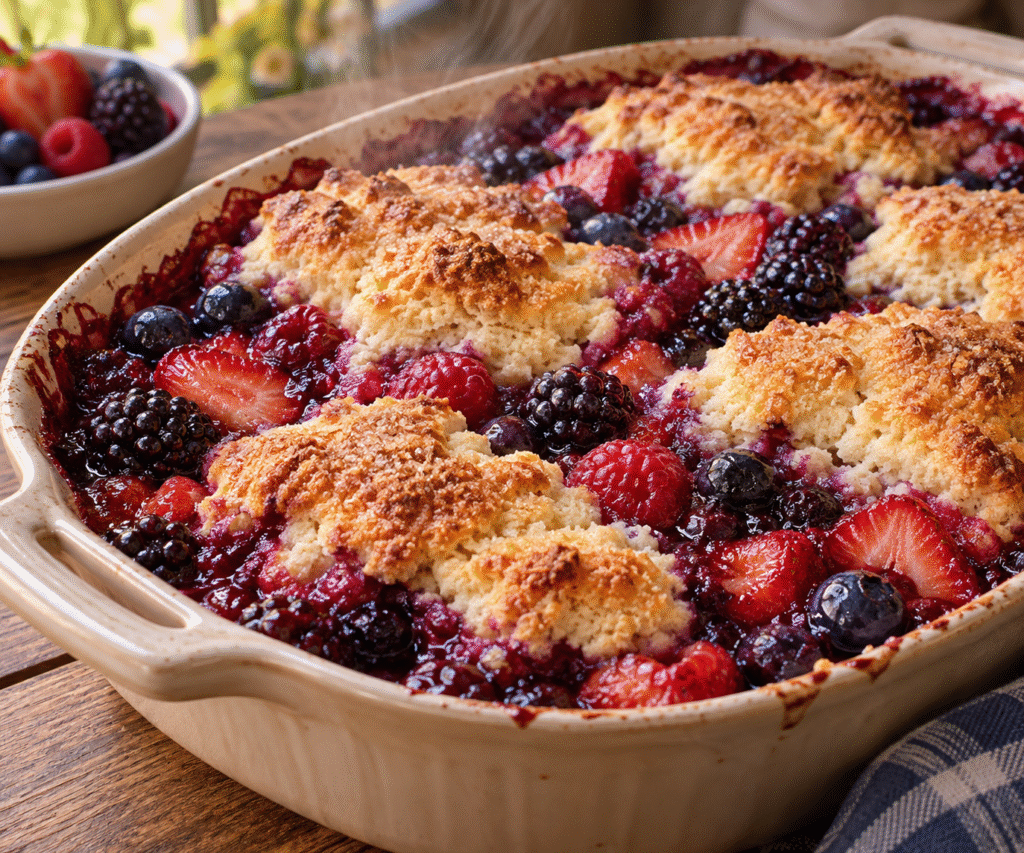
There is something about cobbler that feels made for fall.
Maybe it is the bubbling fruit around the edges of the baking dish. Maybe it is the buttery topping that never comes out exactly the same way twice. Or maybe it is simply that cobbler gives you an excuse to use whatever fruit happens to be at its best.
Travel across the United States and that fruit changes. So does the topping.
Peaches and pecans feel at home in the South. Apples and cranberries make sense in New England. Head west and pears, blackberries and warming spices start appearing. In the Midwest, cherries, apples, pears and other orchard fruits find their way into big baking dishes meant for sharing.
That is what makes regional cobbler recipes interesting. The basic idea stays simple, but local ingredients give each version its own character.
Key Takeaways
- The best fall cobblers start with fruit that is naturally suited to the region and season.
- Southern cobblers often lean toward peaches, pecans and biscuit-style toppings.
- New England versions work beautifully with apples, cranberries and warm baking spices.
- Pacific Northwest cobblers are a natural home for pears and blackberries.
- You do not need the exact regional fruit to make a good cobbler. Frozen fruit and sensible substitutions work surprisingly well.
How Geography Shapes Fall Desserts
Before supermarkets could move fruit thousands of miles in a matter of days, home cooks baked with what they could grow, preserve or buy nearby.

That simple fact helped shape American desserts.
A successful orchard crop in one part of the country might be far less practical somewhere else. Climate, rainfall, soil and growing seasons all affected what ended up in the kitchen.
Over generations, those ingredients became traditions.
That is particularly easy to see with cobbler because the dessert is so adaptable. Unlike a carefully constructed layer cake, cobbler does not demand perfection. Fruit goes into a baking dish, a topping goes over it, and the oven does most of the remaining work.
The fruit can change without losing the soul of the dessert.
That flexibility also explains why there is no single definitive American cobbler. Ask five bakers what belongs on top and you may get five different answers.
And every one of them may insist theirs is the proper way.
The South: Peach and Pecan Heritage
Few fruit and place combinations are as recognizable as peaches and Georgia.
Georgia’s connection with peaches goes back centuries. The state’s Department of Agriculture notes that peach growing developed into an important agricultural industry, while historical records trace the fruit’s presence in Georgia much further back.
That history makes peach cobbler an obvious place to begin.
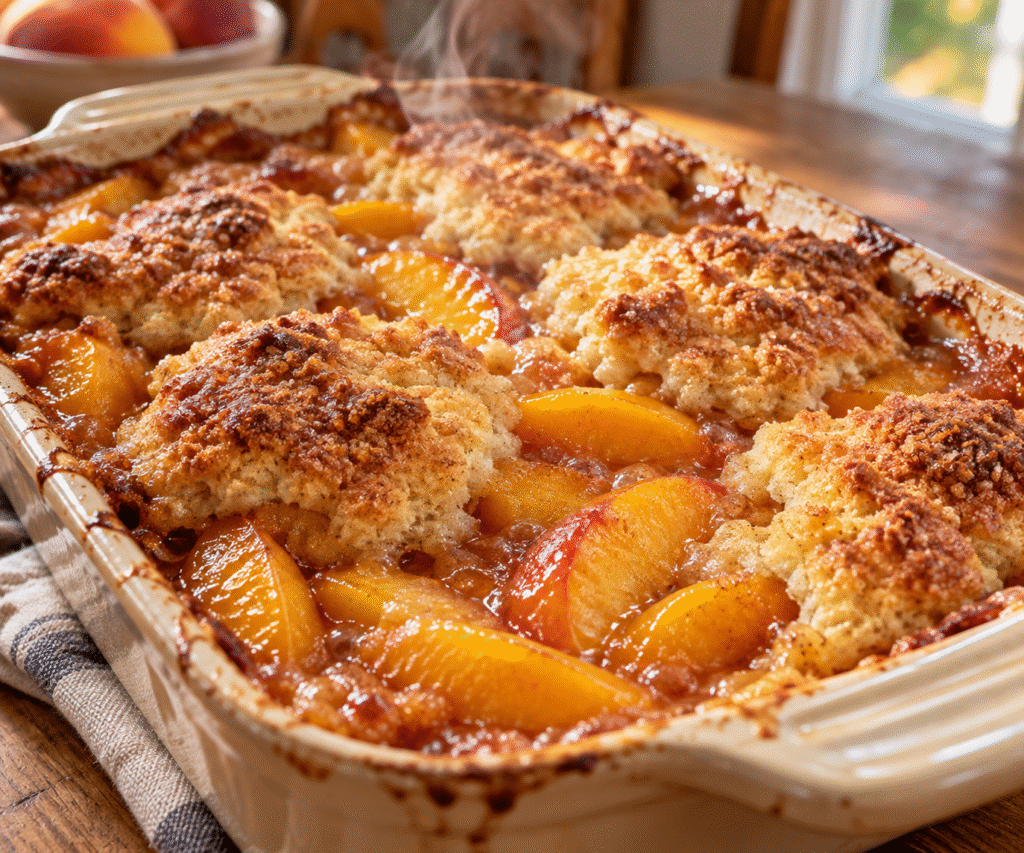
Southern Peach Pecan Cobbler
For the filling:
- 6 cups sliced peaches
- 1/2 cup brown sugar
- 2 tablespoons cornstarch
- 1 tablespoon lemon juice
- 1 teaspoon vanilla
- 1/2 teaspoon cinnamon
- Pinch of salt
- 1/2 cup chopped pecans
For the biscuit topping:
- 1 1/2 cups all-purpose flour
- 1/4 cup sugar
- 2 teaspoons baking powder
- 1/2 teaspoon salt
- 6 tablespoons cold butter
- 2/3 cup buttermilk
Heat the oven to 375°F.
Toss the peaches with brown sugar, cornstarch, lemon juice, vanilla, cinnamon and salt. Transfer everything to a buttered baking dish and scatter the pecans over the fruit.
Mix the flour, sugar, baking powder and salt separately. Cut in the cold butter until you have coarse crumbs, then gently stir in the buttermilk.
Drop spoonfuls of dough over the peaches. Do not worry about covering every inch.
Bake for roughly 35 to 45 minutes, until the fruit is bubbling and the biscuits are golden.
The pecans are optional, but they add enough crunch to make them worth keeping.
If fresh peaches are unavailable in autumn, frozen sliced peaches are the easy answer. Thaw them first and drain excess liquid before making the filling.
New England: Apple and Cranberry Cobbler
New England gives us an entirely different fall pantry.
Apples are the obvious starting point, but cranberries are what make this combination interesting. Their acidity cuts through the sweetness of cooked apples and keeps the finished cobbler from becoming flat or overly sugary.
The combination also gives you two very different textures. Apples soften while retaining some structure. Cranberries collapse and release their juices.
Apple Cranberry Cobbler
For the filling:
- 5 cups peeled and sliced apples
- 1 1/2 cups fresh or frozen cranberries
- 2/3 cup brown sugar
- 2 tablespoons flour
- 1 teaspoon cinnamon
- 1/4 teaspoon nutmeg
- 1 tablespoon lemon juice
For the topping:
- 1 cup flour
- 1/2 cup rolled oats
- 1/2 cup brown sugar
- 6 tablespoons cold butter
- 1/2 teaspoon cinnamon
- Pinch of salt
Heat the oven to 375°F.
Combine the apples, cranberries, sugar, flour, cinnamon, nutmeg and lemon juice. Place the mixture in a buttered baking dish.
Rub the topping ingredients together until you have uneven crumbs. Scatter them loosely over the fruit.
Bake for 40 to 45 minutes.
For apples, choose varieties that hold some structure when heated. Granny Smith brings acidity, while firmer sweet apples can balance the filling.
Using two apple varieties is even better. You get more interesting flavor than you will from a single type.
Pacific Northwest: Pear and Blackberry Cobbler
The Pacific Northwest practically invites you to bake with berries.
Oregon State University Extension documents numerous blackberry varieties grown in the region, including Marion, Columbia Star and Black Diamond. Depending on the type, some Oregon blackberries can ripen into early fall.
Pair those berries with pears and you get one of the most interesting fall cobbler varieties on this list.
Pears bring mellow sweetness. Blackberries bring acidity and a deeper fruit flavor.
Pear Blackberry Cobbler
For the filling:
- 4 cups sliced Bosc pears
- 2 cups blackberries
- 1/2 cup sugar
- 2 tablespoons cornstarch
- 1 tablespoon lemon juice
- 1/2 teaspoon cardamom
- 1 teaspoon vanilla
For the topping:
- 1 1/2 cups flour
- 1/3 cup sugar
- 2 teaspoons baking powder
- 6 tablespoons cold butter
- 2/3 cup milk
Combine the pears, blackberries, sugar, cornstarch, lemon juice, cardamom and vanilla.
Transfer to a buttered baking dish.
Prepare the topping by mixing the dry ingredients and cutting in the butter. Stir in enough milk to produce a soft dough, then spoon it over the fruit.
Bake at 375°F for about 40 minutes.
Cardamom is especially good here.
Cinnamon works, of course, but cardamom lets the pear remain noticeable rather than making the whole dish taste like standard apple pie spice.
And don’t worry if fresh berries have disappeared from the market. Frozen blackberries are perfectly suitable for cobbler.
Midwest: Cherry and Pear Cobbler
Midwestern baking traditions have always made good use of fruit that can be grown, canned, frozen or preserved.
For a fall cobbler, cherries and pears make an underrated combination.
The pear supplies sweetness and body while the cherries provide enough acidity to keep each bite lively.
Cherry Pear Cobbler
You will need:
- 3 cups pitted cherries
- 3 cups diced pears
- 1/2 cup sugar
- 2 tablespoons cornstarch
- 1 teaspoon vanilla
- 1 tablespoon lemon juice
- Pinch of cinnamon
Use the biscuit topping from the Southern recipe or the crumb topping from the apple-cranberry version.
That is part of the fun.
Regional ingredients do not mean the recipe has to become a museum piece. Recipes move between families and communities, and cooks change them.
Your cobbler can too.
Cobbler Topping Styles Explained
Here is where things can get confusing.
Cobbler, crisp and crumble are often treated as interchangeable desserts, but the topping makes a noticeable difference.
Biscuit Topping
This produces the classic rustic cobbler appearance.
Small pieces of biscuit dough are placed over the fruit before baking. The top becomes golden while the underside absorbs some of the fruit juices.
It is particularly good with peaches, berries and cherries.
Cake-Like Topping
Some cobblers use a looser batter instead of biscuit dough.
As it bakes, the batter rises around the fruit and creates a softer, more cake-like dessert.
This style is excellent when you want something that can be scooped straight from the baking dish.
Crumb Topping
Butter, flour, sugar and sometimes oats are mixed into crumbs and scattered over the fruit.
Technically, you are moving into crisp or crumble territory here.
Does that mean you should not put it on your fruit?
Absolutely not.
Dessert police have yet to show up at my kitchen.
Use the topping you enjoy.
How to Choose Better Fruit for Cobbler
Cobbler is forgiving, but poor fruit will still give you poor results.
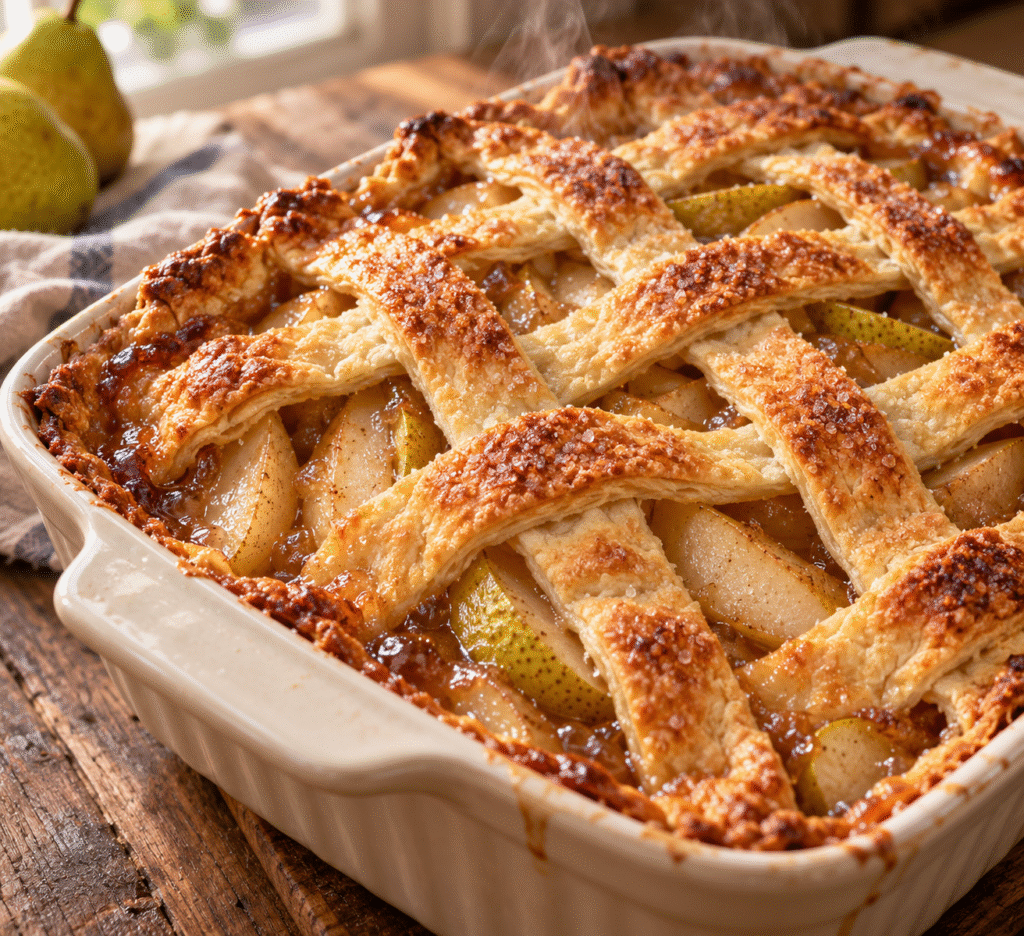
You do not need flawless fruit. In fact, slightly imperfect farmers market fruit can be ideal because appearance matters very little once everything is sliced and baked.
What matters is flavor.
Smell peaches before buying them. Look for pears that are ripe but still firm enough to slice. Choose apples without major soft spots. Berries should look plump rather than wet or crushed.
When fresh local fruit is unavailable, frozen fruit is often preferable to fresh fruit that has travelled long distances and has little flavor.
Frozen fruit is especially useful for berries and peaches.
The USDA also maintains extensive information on U.S. fruit and tree-nut availability and production, which can be useful when exploring seasonal ingredients beyond your own region.
Three Useful Resources for Seasonal Bakers
For more information on regional produce and fruit growing, these are worth bookmarking:
Georgia Department of Agriculture Peach Commission
Oregon State University Extension Blackberry Guide
USDA Economic Research Service Fruit and Tree Nuts Data
How to Adapt a Cobbler to What Grows Near You
You do not have to live in Georgia to bake peach cobbler or Oregon to bake with blackberries.
Regional cooking is more useful as inspiration than as a set of rules.
Start by looking at what is actually good where you live.
If peaches have finished for the year, use apples or pears. When fresh blackberries are gone, use frozen berries. If cranberries are too tart for your family, reduce the quantity and increase the apples.
The easiest formula is roughly six cups of prepared fruit for a standard baking dish.
Juicy fruit usually needs a thickener such as cornstarch or flour. Firmer fruit may need a little extra baking time.
Then adjust the sugar after tasting the fruit.
That last part matters.
A very sweet peach may need surprisingly little sugar. Tart cranberries need considerably more help.
Recipes cannot taste your fruit for you.
You can.
That is why the best regional cobbler recipes should be treated as starting points rather than rigid formulas.
Storing and Reheating Cobbler
Cobbler is at its best when it has cooled just enough for the filling to thicken but the topping is still warm.
Give it 15 to 30 minutes after removing it from the oven.
For leftovers, refrigerate the cobbler in a covered container. Reheating individual servings in the microwave works, although the topping will soften.
For a crisper topping, warm the cobbler in the oven instead.
You can also prepare many fruit fillings ahead of time. Keep the prepared filling refrigerated and make the topping shortly before baking.
Frequently Asked Questions
Can I substitute frozen fruit for fresh fruit?
Yes. Frozen peaches, cherries and berries are particularly useful. Thaw very juicy fruit and drain some excess liquid before adding it to the filling.
Can I combine different fruits?
Absolutely.
Apple-cranberry, peach-blackberry, cherry-pear and apple-pear are easy combinations to start with.
Try pairing a sweeter fruit with something more acidic.
How do I stop cobbler from becoming watery?
Use the right amount of thickener and allow the cobbler to rest after baking.
The filling continues to thicken as it cools.
Cutting into it immediately may give you fruit soup rather than cobbler.
Delicious fruit soup, admittedly, but still soup.
What are the best apples for cobbler?
Firm apples that maintain some structure during baking work best. Granny Smith is a reliable tart option, but combining tart and sweeter apples creates better flavor.
Should cobbler be served hot or cold?
Warm is hard to beat.
Let it cool for at least 15 minutes first so the juices have time to settle.
Can cobbler be made ahead?
Yes.
You can bake it earlier in the day and gently reheat it before serving. For the best topping texture, an oven works better than a microwave.
What if the fruit I want is out of season?
Use frozen fruit or substitute another seasonal fruit with similar characteristics.
Peaches can become pears. Blackberries can become blueberries or raspberries. Tart cherries can be paired with apples.
The technique matters more than strict adherence to one ingredient.
Bringing Regional Fall Flavors Home
The beauty of autumn fruit cobblers is that they do not require precision or expensive ingredients.
They reward good fruit, simple technique and a little common sense.
Start with peaches and pecans when you want Southern flavor. Pair apples with cranberries for a New England-inspired version. Try pears and blackberries for a taste of the Pacific Northwest. Combine orchard fruits and cherries for a hearty Midwestern-style dessert.
Then change things.
Use the fruit growing near you. Adjust the sweetness. Switch the spices. Try another topping.
That is how regional food traditions stay alive.
Not by freezing recipes in time, but by cooking them again.