
Key Takeaways
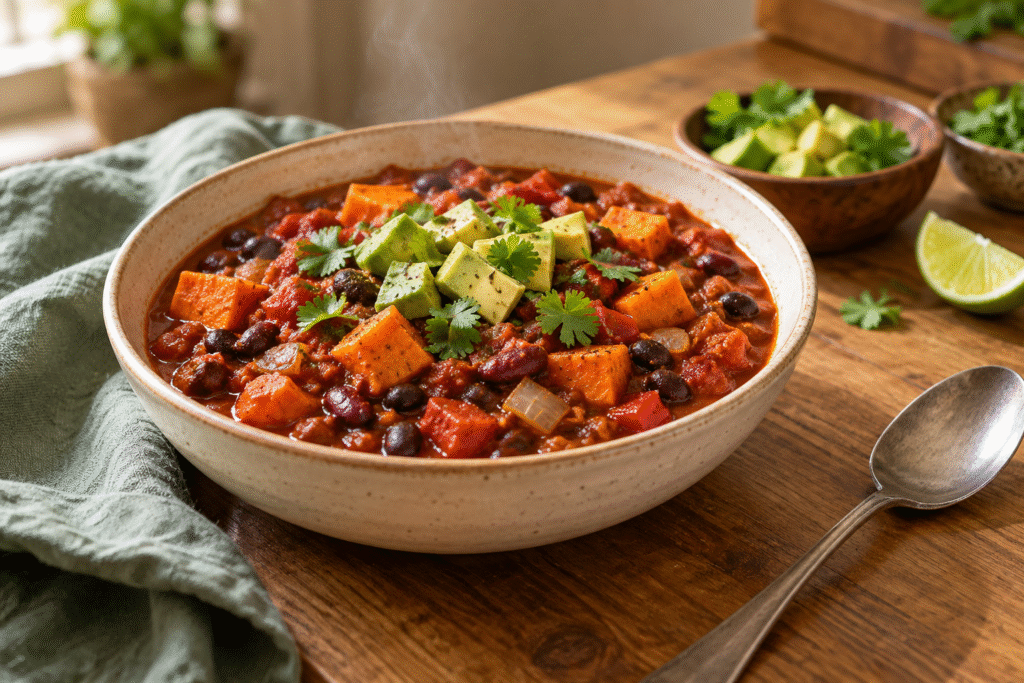
Sweet Potato Chili is a cozy, flexible meal built on contrast: naturally sweet vegetables, smoky spices, bright tomatoes, and creamy beans. A few careful choices make the pot more flavorful and easier to adapt.
- Cut sweet potatoes evenly so they finish cooking at the same time.
- Toasting spices briefly helps deepen their aroma before the broth goes in.
- Black, kidney, pinto, and cannellini beans all bring a slightly different texture.
- Add heat gradually, since spice is easier to increase than to remove.
- Cool leftovers promptly and reheat them gently to protect the vegetables.
What makes sweet potato chili satisfying
Sweet potato chili has the comfort of a slow-simmered stew without needing a complicated ingredient list. Its appeal comes from layered contrasts: soft cubes against tender beans, deep spice against bright tomato, and a gentle sweetness beneath the savory base. It can be a hearty vegetarian dinner, or a foundation for meat, grains, and whatever toppings are waiting in the refrigerator.
How sweet potatoes balance smoky and spicy flavors
Sweet potatoes bring a mellow sweetness that rounds off smoky paprika, ancho chile, chipotle, or cayenne. They do not erase heat; instead, they give the palate a softer note to return to between spicy bites. Their starch also dissolves slightly as they cook, giving the broth a fuller texture without adding cream.
The key is to keep the cubes large enough to hold their shape. A piece that is too small may disappear into the pot before the flavors have had time to develop, while a larger cube can stay firm in the center.
The role of beans, tomatoes, and aromatics
Beans provide substance and a creamy interior, while tomatoes contribute acidity that keeps the sweet potato from making the dish taste flat. Onion, garlic, and bell pepper form the savory foundation, especially when they are cooked slowly enough to soften and become fragrant. Together, these ingredients make a pantry-friendly chili feel rounded rather than merely assembled.
For another plant-based interpretation, The Kitchn pairs sweet potato with black beans, bell pepper, onion, canned tomatoes, and warm spices. That combination is a useful reminder that a modest group of ingredients can carry plenty of flavor.
Choosing the right chili spices
A balanced spice blend usually needs more than ground chili powder. Cumin adds earthiness, smoked paprika supplies a woodsy note, oregano gives the pot a green, savory edge, and a small amount of cinnamon can quietly deepen the sweetness. Use salt in stages so the beans and broth become seasoned rather than leaving all the adjustment until the end.
A simple guide can help you decide what each spice is doing:
| Spice | Main character | Best use |
|---|---|---|
| Ground cumin | Earthy and warm | Builds the savory base |
| Smoked paprika | Woodsy and mellow | Adds smoke without much heat |
| Dried oregano | Herbal and savory | Brightens tomato-based chili |
| Cayenne | Clean, direct heat | Raises spice gradually |
The amounts should suit your ingredients and your table. A layered spice profile is usually more satisfying than relying on one hot ingredient to do all the work.
Making the recipe vegetarian, vegan, or meat-based
The easiest vegetarian version uses beans, extra vegetables, and enough broth to create a substantial bowl. For a vegan pot, choose vegetable broth and finish with avocado, cilantro, or a dairy-free crema. Meat-based versions can begin with browned ground beef, turkey, or pork, but the sweet potato should remain a visible part of the dish rather than getting lost in the meat.
The result is flexible enough for different diners without requiring separate recipes. Start with a moderate spice level, then let each person add heat at the table.
Ingredients and smart substitutions
The best ingredients for sweet potato chili are familiar, forgiving, and easy to keep on hand. Fresh vegetables provide fragrance, canned tomatoes create the liquid base, and beans make the pot filling without demanding a long cooking time. Substitutions are welcome, but they work best when you preserve the balance of sweet, savory, acidic, and spicy elements.
Sweet potatoes: size, variety, and preparation
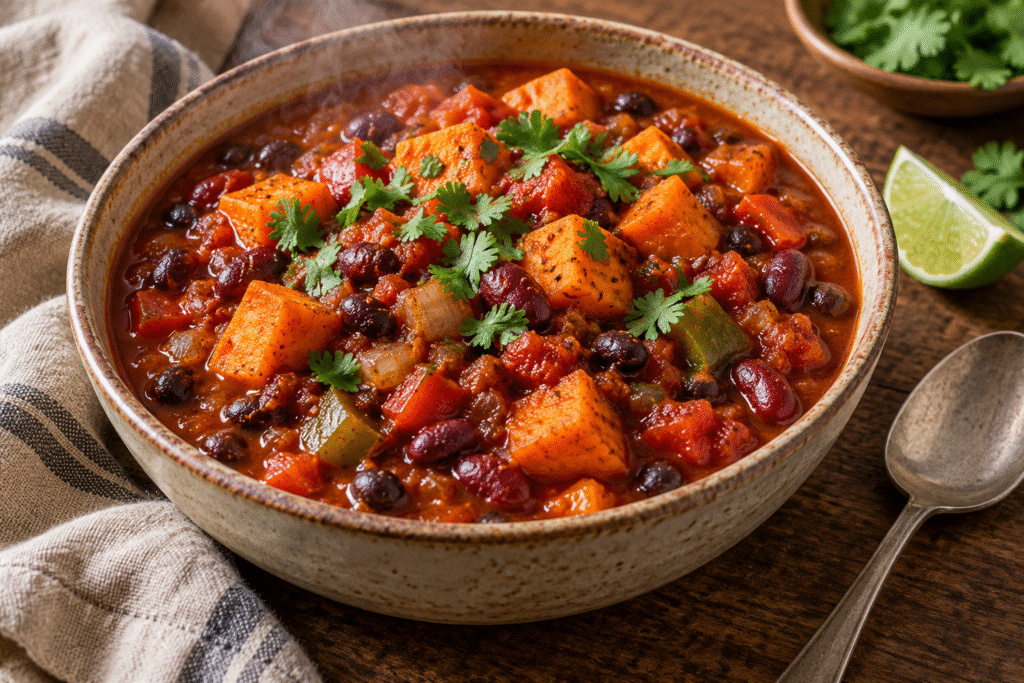
Choose firm sweet potatoes with smooth skin and no soft spots. Orange-fleshed varieties are especially good for their color and creamy texture, though other sweet potato varieties can work too. Peel them if the skin is rough, then cut them into even chunks of roughly three-quarters of an inch.
Rinse the cubes only if they are visibly dusty, and dry them before adding them to the pot. Uniform pieces matter more than exact size: the goal is for every bite to become tender during the same simmer.
Beans that work best in chili
Black beans give the chili a dark, earthy character, kidney beans stay pleasantly firm, and pinto beans soften into the broth. Cannellini beans offer a mild, creamy alternative when you want the sweet potato to stand out. Canned beans should be drained and rinsed before use, while cooked dried beans can be added once they are tender.
A blend is often more interesting than a single variety. Two cans of different beans can provide both contrast and a thicker texture without changing the method.
Fresh, canned, and dried chili options
Fresh jalapeño or poblano adds vegetal flavor, while canned chipotle in adobo brings smoke and concentrated heat. Dried ancho, guajillo, or mild chile powder can supply fruitiness and depth. If you are using a new chile, add a small amount first; varieties differ considerably in intensity.
The Cozy Apron offers another useful direction through The Cozy Apron, pairing sweet potatoes with ground beef, red beans, bell peppers, and warm spices. That kind of combination shows how easily the same vegetable can move from a plant-based pot to a meat-based skillet-style meal.
Broth, tomatoes, and seasoning substitutions
Use vegetable broth for a vegetarian or vegan chili, chicken broth for a lighter meat-based version, or water when the tomatoes and aromatics are already strongly seasoned. Crushed tomatoes create a smoother base, while diced tomatoes leave more texture. Fire-roasted tomatoes can add a subtle charred note, but reduce extra smoked paprika if the flavor becomes too heavy.
If you are out of broth, water plus a little tomato paste and additional salt can work. A squeeze of lime at the end can replace some of the brightness lost when using a very sweet tomato product.
How to make sweet potato chili
This chili becomes much more rewarding when each stage has a clear purpose. First, soften the vegetables; then wake up the spices; finally, simmer everything until the sweet potatoes are tender but intact. The process is straightforward, but rushing the early steps can leave the finished pot tasting thin.
Building flavor with sautéed aromatics
Warm a little oil in a heavy pot over medium heat. Add diced onion and bell pepper with a pinch of salt, then cook until the onion turns translucent and the pepper begins to soften. Stir in the garlic near the end so it becomes fragrant without scorching.
For a reliable aromatic base, keep the pieces fairly small and stir often enough to prevent browning in just one spot. Once the vegetables look glossy and softened, the pot is ready for the spices.
A useful sequence is:
- Cook the onion until translucent and lightly golden at the edges.
- Add bell pepper and continue until it softens but still has structure.
- Stir in garlic for about a minute, just until fragrant.
- Scrape the bottom when the liquid is added so the cooked bits return to the chili.
This order gives the vegetables time to develop sweetness while protecting the more delicate garlic. It also creates a flavorful surface for the spices to cling to.
Toasting the spices before adding liquid
Add cumin, chili powder, paprika, oregano, and any other dry spices directly to the softened aromatics. Stir for thirty seconds or so, just until the mixture smells warm and aromatic. A small splash of oil helps the spices bloom, but do not let them sit unattended because dry spices can burn quickly.
Once the aroma opens up, add the tomatoes and broth. The liquid stops the spices from frying and loosens the browned bits at the bottom of the pot.
Simmering the sweet potatoes until tender

Add the sweet potato cubes after the tomatoes and broth have been stirred together. Bring the chili to a gentle bubble, then lower the heat and partially cover the pot. Simmer until a fork slides into the cubes with slight resistance, usually around twenty to thirty minutes depending on their size.
Add the beans during the latter part of cooking if they are already tender. This keeps them intact and lets them absorb the seasoned broth without turning mushy. Stir occasionally, but handle the sweet potatoes gently.
Adjusting the consistency and seasoning
When the sweet potatoes are tender, taste the chili before making final adjustments. Add salt first, then consider lime juice, more chile, or a little broth depending on what the pot needs. If the chili is too loose, simmer it uncovered; if it is too thick, add broth a few tablespoons at a time.
A brief rest off the heat helps the flavors settle and gives the broth time to thicken. The finished texture should be spoonable and hearty, not dry or stiff.
Ways to customize the chili
Sweet potato chili is a good starting point for a whole family of meals. You can make it smoky and rustic, bright and citrusy, or extra substantial with grains or protein. Change one element at a time so you can tell which adjustment improves the pot.
Adding ground meat or plant-based protein
Brown ground beef, turkey, or pork before cooking the aromatics, then drain excess fat if needed. For a plant-based option, use crumbled tempeh, cooked lentils, or a meatless crumble and season it along with the vegetables. Keep enough tomato and broth in the pot to prevent the added protein from making the chili dense.
If using lentils, choose a variety that holds its shape and account for the extra liquid they may absorb. Cooked protein can be stirred in later, which is useful when adapting one base for several eaters.
Increasing heat with peppers and hot sauces
Heat can come from fresh jalapeños, serranos, canned chipotle, red pepper flakes, or hot sauce. Fresh peppers add a greener flavor, while chipotle gives a deeper smoky note. Add small amounts during cooking and taste again after the chili rests, since heat can become more apparent as the pot sits.
For a shared meal, keep the base gentle and offer hot sauce at the table. This lets everyone shape their own bowl without overwhelming the sweetness of the potatoes.
Using grains for a heartier meal
Cooked farro, quinoa, brown rice, or barley can turn a bowl of chili into an even more filling meal. Add sturdy grains near the end so they warm through without absorbing all the broth. Softer grains may be better served underneath the chili, where they can catch the sauce while keeping the pot itself loose.
If you expect leftovers, store grains separately when possible. They continue absorbing liquid in the refrigerator and can make tomorrow’s chili seem much thicker than today’s.
Creating a smoky, creamy, or citrus-forward variation
For more smoke, use fire-roasted tomatoes, smoked paprika, or a small amount of chipotle. For creaminess, mash a few beans against the side of the pot or finish individual bowls with avocado, sour cream, yogurt, or a dairy-free alternative. Lime zest, lime juice, or orange zest can lift the entire dish with a clean citrus note.
Baked Sweet Potatoes with Chilli offers a different route to smoky, plant-based comfort, using tofu, beans, walnuts, and sweet potatoes. That combination can inspire toppings or textures even when you are making a one-pot chili.
Serving sweet potato chili
A good bowl should have more than warmth. Fresh herbs, creamy toppings, crunchy additions, and something acidic make each spoonful feel brighter and more varied. Set out a few options and let the meal become part of the experience rather than treating toppings as an afterthought.
Toppings that add freshness and texture
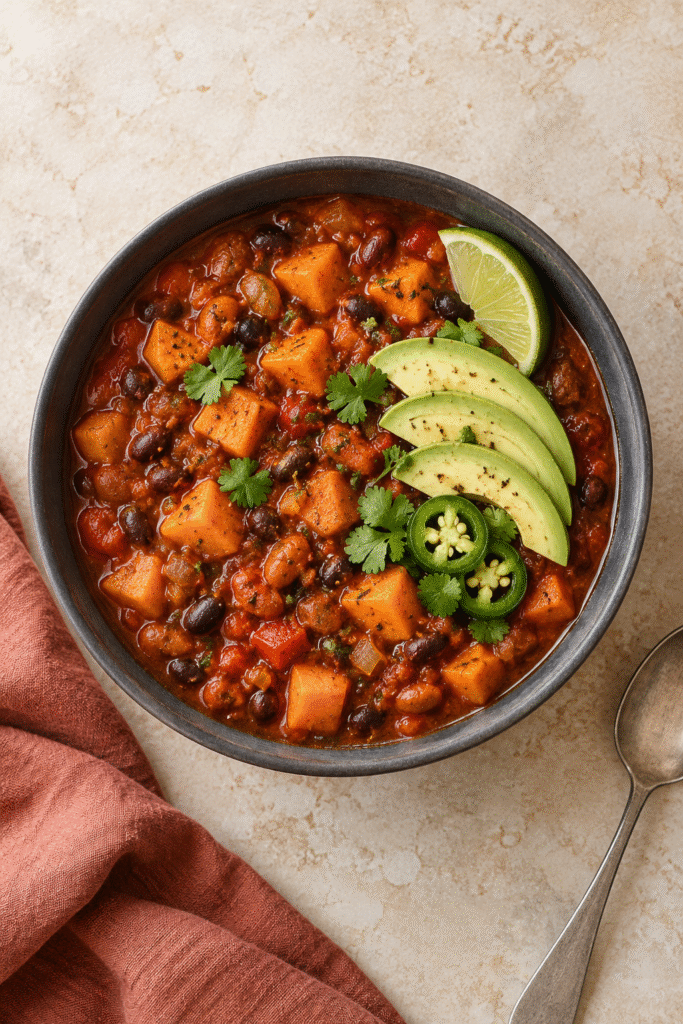
Cilantro, sliced scallions, diced avocado, and pickled jalapeños all bring freshness. Toasted pumpkin seeds, tortilla strips, crushed corn chips, or diced red onion add contrast against the soft beans and sweet potatoes. A spoonful of yogurt, sour cream, or cashew crema can cool the heat and make the broth feel silky.
Use one creamy topping, one fresh topping, and one crunchy topping for a balanced bowl. A final squeeze of lime keeps the flavors from feeling too rich.
Side dishes that pair well with chili
Warm cornbread is a classic partner because it catches the broth and adds a gentle sweetness of its own. Rice, tortillas, or a simple green salad also work well, especially when the chili is particularly thick. For a lighter spread, serve it with cabbage slaw dressed in lime and a little salt.
The right side depends on the texture of the pot. A loose chili benefits from something absorbent, while a thick chili may be better with crisp vegetables or a bright salad.
Making individual bowls for different spice preferences
Keep the main pot moderately seasoned, then offer heat separately through hot sauce, sliced chiles, chile flakes, or spiced oil. Diners can also choose cooling toppings such as avocado or yogurt. This approach is especially useful when children or spice-sensitive guests are sharing the meal.
Build bowls in layers rather than stirring every topping into the pot. That way, the base stays consistent and each person can create a different balance of heat, freshness, and crunch.
Turning leftovers into new meals
Leftover chili can fill baked potatoes, top nachos, or become a thick filling for quesadillas and tacos. Spoon it over rice or a grain bowl, or thin it with broth for a quick second-day soup. A fried or poached egg on top can turn a small portion into a satisfying brunch.
The flavors often deepen overnight, so leftovers are worth planning for. Keep toppings fresh and separate until serving to preserve their texture.
Storing, reheating, and troubleshooting
A well-made chili is particularly forgiving after cooking, but storage and reheating still affect its texture. Cool it in shallow containers rather than leaving a large, hot pot on the counter for a long time. Labeling portions with the date makes it easier to enjoy the best texture first.
Refrigerating and freezing leftovers safely
Let the chili stop steaming before transferring it to airtight containers, then refrigerate it promptly. Use refrigerated portions within a few days, or freeze them in serving-size containers with a little room for expansion. Thaw frozen chili in the refrigerator when possible, then reheat it until fully hot.
Freeze toppings separately. Fresh herbs, avocado, crunchy chips, and dairy-based garnishes are best added after reheating rather than stored in the chili.
Reheating without drying out the chili
Warm the chili gently in a saucepan over medium-low heat, stirring occasionally. Add a splash of broth or water if the beans and sweet potatoes have absorbed too much liquid. Individual portions can be reheated in the microwave in short intervals, with a stir between each one.
Avoid a prolonged, vigorous boil. It can break down the beans and cause the sweet potato cubes to lose their shape before the center of the portion is evenly hot.
Fixing chili that is too spicy, sweet, thin, or thick

Small adjustments are usually enough to rescue an uneven pot. Taste after each change rather than adding several corrections at once, since salt, acid, and heat can shift quickly as the chili rests.
- Too spicy: add more beans, tomatoes, broth, or a cooling topping.
- Too sweet: brighten it with lime juice, vinegar, or extra savory spices.
- Too thin: simmer uncovered, mash a few beans, or stir in cooked grains.
- Too thick: loosen it with broth or water and check the salt again.
A little acidity is often the most useful finishing tool. It can make a sweet or heavy chili taste more focused without adding another strong flavor.
Preventing mushy sweet potatoes and beans
Use evenly cut sweet potato pieces and keep the simmer gentle rather than boiling hard. Add canned beans later in the cooking process, especially if they are already very soft. Stir with a broad spoon and avoid repeatedly scraping the bottom, which can break up the vegetables.
If the chili will be reheated the next day, stop cooking the sweet potatoes when they are just tender. They will soften further as the stored chili cools and warms again.
Conclusion
Sweet Potato Chili rewards a little patience but asks for very little fuss: build a fragrant base, toast the spices, simmer gently, and finish with something bright. From a simple bean-filled supper to a richly topped meal for friends, it offers plenty of room for flavorful escapades and personal touches.
Frequently Asked Questions
Do I need to peel sweet potatoes for chili?
No. The skin is edible when the sweet potatoes are well scrubbed, though peeling gives the chili a smoother, more uniform texture. Either choice works as long as the cubes are evenly cut.
Which beans are best for sweet potato chili?
Black, kidney, pinto, and cannellini beans all work well. Black beans bring an earthy flavor, kidney beans hold their shape, pinto beans soften nicely, and cannellini beans create a milder, creamy bite.
Can I make sweet potato chili in a slow cooker?
Yes. Sauté the aromatics and bloom the spices first if you can, then transfer them with the remaining ingredients to the slow cooker. Add canned beans later when possible to help them retain their shape.
How can I make the chili less spicy?
Use fewer hot peppers and omit or reduce cayenne and chipotle. You can also add more tomatoes, beans, broth, or a cooling topping such as yogurt, sour cream, or avocado.
Can I freeze sweet potato chili?
Yes. Cool it promptly, portion it into airtight freezer-safe containers, and leave room for expansion. Thaw it in the refrigerator and add fresh toppings after reheating.
Why did my sweet potatoes turn mushy?
They may have been cut too small, boiled too vigorously, or cooked longer than needed. Use larger, even cubes, maintain a gentle simmer, and add already-cooked beans later in the process.
What can I serve with sweet potato chili?
Cornbread, rice, tortillas, tortilla chips, and lime-dressed salad all pair nicely. Fresh herbs, avocado, pickled chiles, and crunchy seeds can also add contrast directly to the bowl.