
Key Takeaways
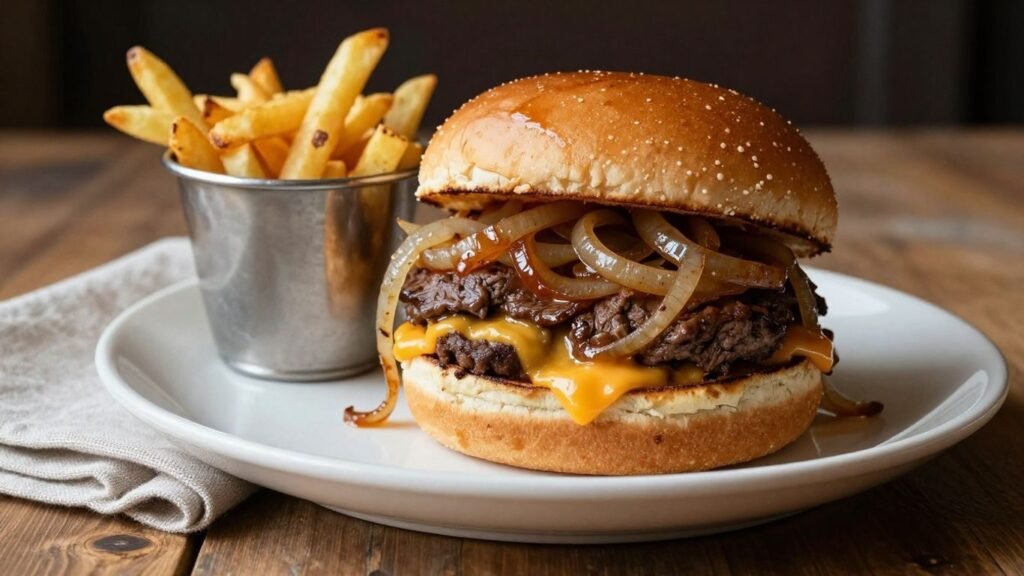
Martha Stewart French Dip Burgers bring together a richly blended beef patty, toasted bread, melted cheese, and a warm broth for dipping. The best results come from treating each component with care, from chilling the patties to keeping the au jus pleasantly hot.
- A short rib blend gives the burger a fuller, beefier flavor.
- Toasted bread helps the sandwich hold up to dipping.
- A gently seasoned au jus should complement, not hide, the patty.
- Chilling the formed patties makes them easier to cook neatly.
- Assemble just before serving so the bread stays crisp.
What makes Martha Stewart French Dip Burgers distinctive
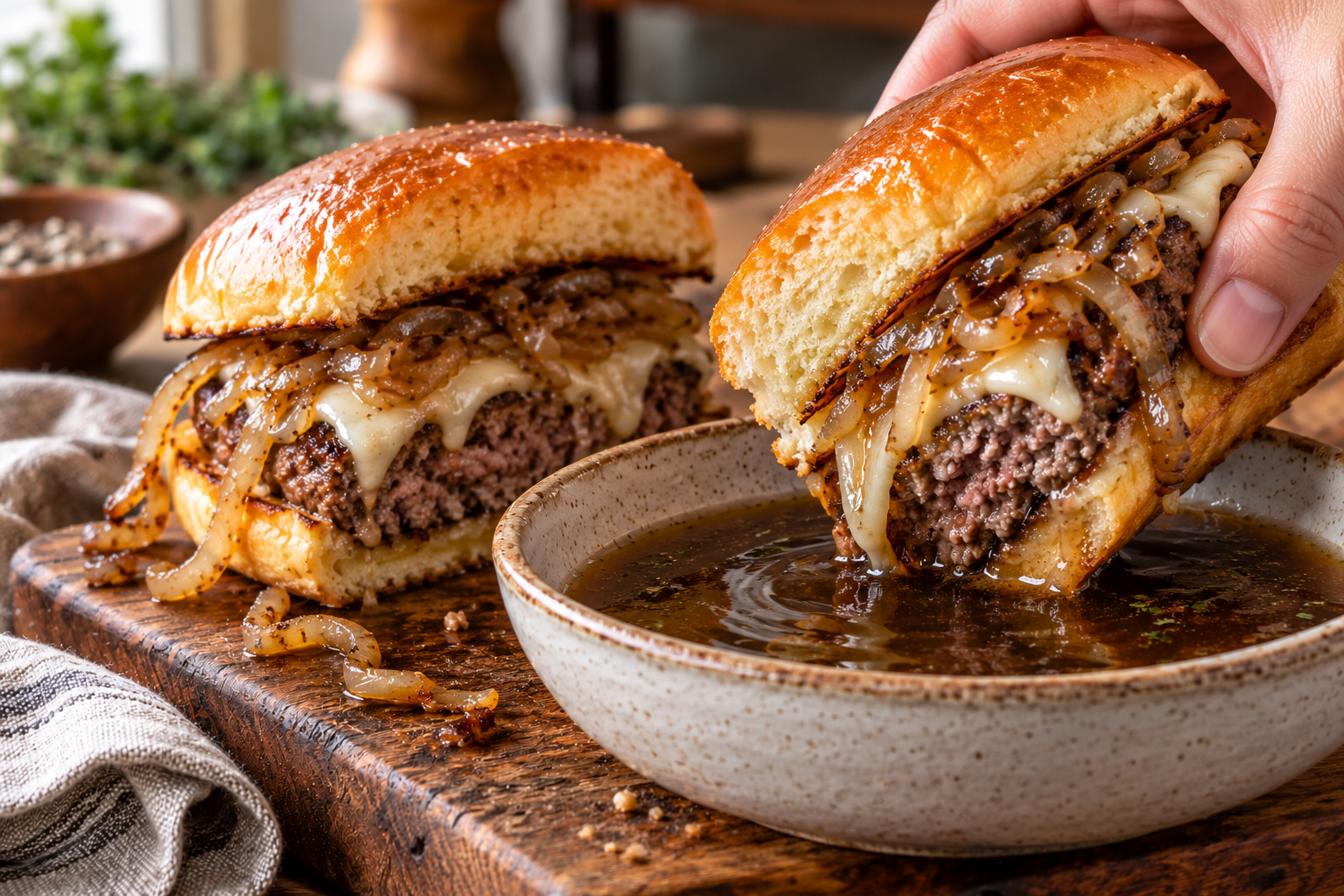
Martha Stewart French Dip Burgers borrow the pleasure of a classic French dip sandwich and place it inside a juicy, seared burger. The result is more than a standard cheeseburger with gravy on the side: the broth becomes part of the eating experience. A rich beef blend, soft onions, melted cheese, and crisp-edged bread give every bite a satisfying contrast.
How the short rib blend adds richness
Short rib brings a deep, rounded beef flavor and enough fat to keep a patty succulent. A blend of three beef cuts is also featured in this short rib blend burger, where the varied texture gives the meat more character than very lean ground beef alone. Keep the mixture cold and handle it lightly so that richness does not turn into a dense, tight bite.
The French dip inspiration behind the burger
A French dip is built around warm beef, a sturdy roll, and a savory liquid for dipping. This burger keeps that familiar rhythm but makes the patty the centerpiece. For a useful comparison, this French Dip recipe also treats the au jus as an essential part of the sandwich rather than an afterthought.
Balancing a juicy patty with a savory dipping broth
The burger and the broth should taste connected, but they should not be equally salty or equally intense. Season the patty simply, then build the au jus with browned aromatics and beef stock so it has depth without becoming heavy. Contrast makes the bite memorable: a seared crust, tender center, crisp bread, and warm, pourable broth each have a clear role.
Key ingredients that define the recipe
The core ingredients are straightforward: a flavorful beef blend, onions, garlic, beef broth or stock, bread, and a melting cheese. The au jus benefits from a little acidity or wine if desired, while the burger itself needs only enough seasoning to let the beef remain recognizable. Toasting the bread is especially useful because it adds flavor and gives the sandwich enough structure for dipping.
How to prepare the burger patties
The patty is where the character of the burger begins, so take a calm, light-handed approach. Cold meat, moderate seasoning, and even shaping are more valuable than elaborate mixing. Make the patties slightly wider than the buns because they will contract as they cook.

Choosing and combining the ground beef
Choose ground beef with enough fat to stay moist during searing, and include ground short rib when available. If grinding at home, chill the meat and equipment first, then combine the cuts only until the mixture looks even. Overmixing develops a springy texture that works against the tender, relaxed bite this style of burger needs.
Forming patties that stay tender and hold together
Divide the meat into equal portions and shape each one with gentle pressure. A shallow indentation in the center helps the patty cook more evenly and limits puffing in the pan. Avoid compressing the edges repeatedly; a slightly craggy surface will brown well and hold onto melted cheese.
Seasoning the meat without overpowering it
Salt and pepper are usually enough for the patty, especially when the au jus and cheese will add their own savory notes. Season the outside just before cooking rather than working salt deeply into the mixture. This preserves a looser texture and lets the browned exterior carry much of the flavor.
A simple seasoning guide can help keep the components in balance:
| Component | Main flavor goal | Seasoning approach |
|---|---|---|
| Beef patty | Beefy and savory | Salt and pepper just before cooking |
| Au jus | Deep and aromatic | Stock, browned onions, garlic, and herbs |
| Cheese | Creamy and rounded | Choose a good melting variety |
| Bread | Toasty and sturdy | Light butter or oil before toasting |
The guide is less a rigid formula than a reminder to avoid seasoning every element with the same intensity. When the broth is concentrated, the patty can remain especially simple.
Chilling the patties before cooking
Place the shaped patties on a lined plate and chill them for about 20 to 30 minutes. This firms the fat and helps the burgers keep their shape when they meet a hot cooking surface. Do not leave them at room temperature for a long stretch; move them from the refrigerator to the pan when you are ready to cook.
How to make the au jus for dipping
A good au jus should be fluid, savory, and fragrant rather than thick like gravy. It can be made while the patties chill, then held gently until the burgers are ready. Since the broth will touch the bread directly, taste it in a small spoonful before serving and adjust it while there is still time.
Building flavor with onions, garlic, and aromatics
Start by softening sliced onions in a little butter or oil until they become tender and lightly golden. Add garlic toward the end so it perfumes the pan without burning, then introduce herbs such as thyme or a bay leaf if they suit your palate. These aromatics create a flavorful base while keeping the broth recognizable as beef au jus.
Deglazing the pan for deeper beef flavor
If you cook the onions in the same skillet used for the burgers, the browned bits left behind can become part of the broth. Pour in a small amount of stock, water, or wine and scrape the bottom with a wooden spoon. Once the fond has loosened, add the remaining broth and simmer gently rather than boiling it aggressively.
Adjusting the broth’s seasoning and consistency
Taste after the broth has reduced slightly, because evaporation can concentrate salt quickly. Add more stock if it becomes too strong, or let it simmer a few minutes longer if the flavor seems thin. A French dip is traditionally about a pourable dipping liquid, so resist the urge to thicken it heavily with flour.
These small checks keep the au jus lively and balanced:
- Taste for salt only after the broth has warmed and reduced.
- Add a splash of water or unsalted stock if it becomes too concentrated.
- Strain out large aromatics if you want a clean, smooth dipping broth.
- Finish with a little black pepper or fresh herb for lift.
After these adjustments, the broth should coat the spoon lightly but run freely back into the pan. That consistency lets it soak into the toasted bread without turning the sandwich into a soggy, difficult-to-handle meal.
Keeping the au jus warm until serving
Transfer the finished broth to a small saucepan or heatproof bowl and keep it warm over very low heat. Avoid a hard simmer, which can reduce the liquid too far while the burgers cook. Stir once before ladling it into individual cups so the flavor remains evenly distributed.
How to cook the burgers properly
Cooking is about building a browned crust while protecting the tender center. Give the patties room, use a properly heated surface, and resist pressing them down with a spatula. The juices belong in the burger, not scattered across the pan.
Selecting a skillet, grill, or griddle
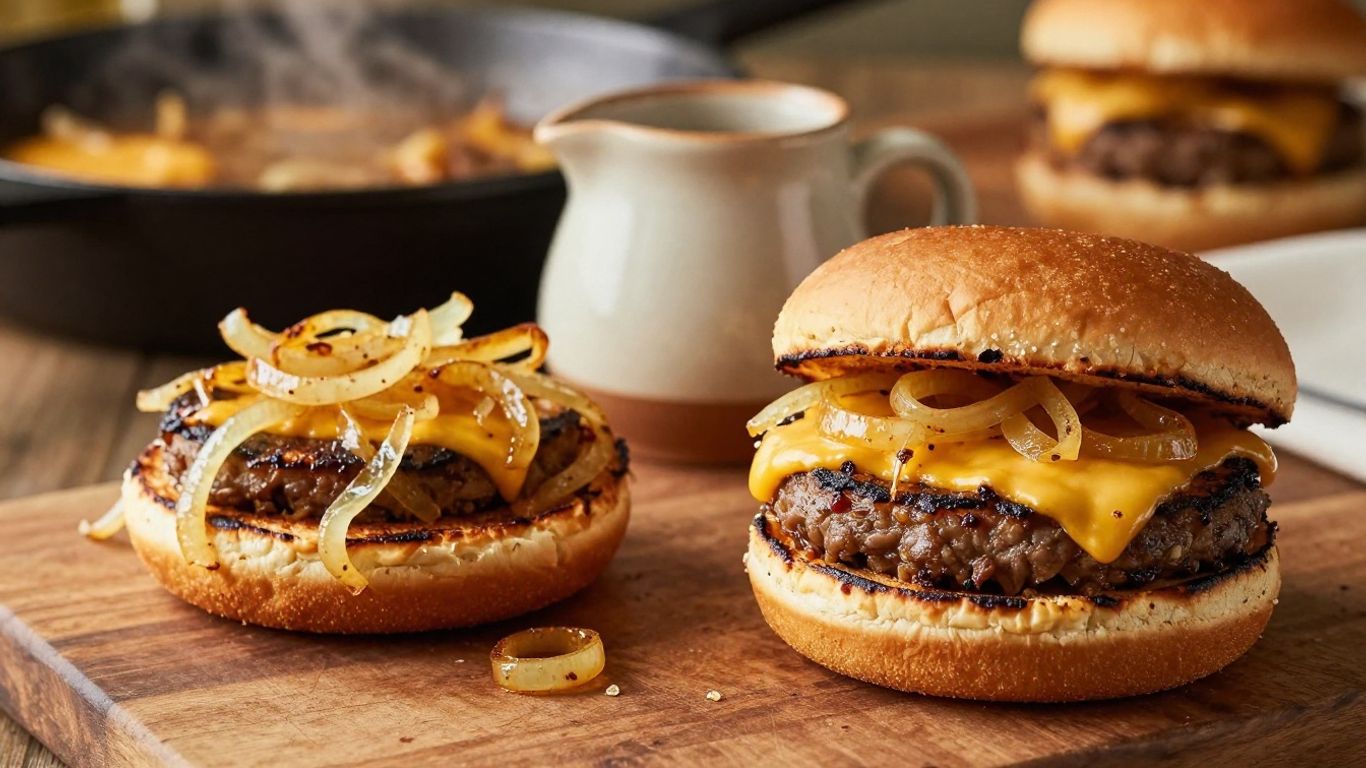
A heavy skillet gives excellent browning and makes it easy to collect the fond for the au jus. A griddle offers a broad, even surface for several patties, while a grill contributes a pleasant smoky edge. Whichever method you choose, make sure the cooking surface is hot before the meat goes down.
Developing a flavorful seared crust
Place the patties on the hot surface and leave them alone long enough for the underside to brown. Flip once when the crust releases naturally, then finish the second side without flattening the meat. If you are adding onions to the same meal, cook them separately or move them to a cooler part of the surface so their sweetness does not burn.
Knowing when the patties are done
The safest way to judge doneness is an instant-read thermometer inserted from the side into the center of the patty. Ground beef should reach a safe internal temperature, and the exact timing will vary with thickness and heat. Avoid relying only on color, since a browned exterior can develop before the center is ready.
Resting the burgers before assembly
Set the cooked patties on a plate for a few minutes while you toast the buns and prepare the cheese. Resting lets the juices settle and keeps the bread from being flooded immediately. The short pause also gives you time to taste the au jus one last time and bring it to the table at the right temperature.
How to assemble French dip burgers
Assembly should happen quickly, but it does not need to be fussy. Toasted bread, hot cheese, and a rested patty are best brought together just before serving. Keep the dipping broth in small cups so everyone can control how much liquid reaches the sandwich.
Choosing bread that can hold the juices
Brioche offers a soft, buttery texture, while a crustier roll provides more resistance against the au jus. Split the bread and toast the cut sides until lightly crisp, leaving the interior tender. A thin layer of butter or oil helps with browning and adds a pleasant savory finish.
Melting cheese without drying out the patty
Place the cheese over the patty during the final minute of cooking, then cover the skillet briefly to trap heat. Cheddar gives a bold, familiar flavor, while provolone or Swiss brings a milder, more classic sandwich character. Remove the patty as soon as the cheese is glossy and softened.
Adding onions and other complementary toppings
Soft sautéed onions are a natural match for the beef and broth, adding sweetness without competing with either. A little mustard sauce, tomato jam, or horseradish can work too, but use toppings sparingly. The goal is to add another layer of flavor while preserving the burger’s French dip identity.
Serving each burger with au jus
Set each burger on its toasted bottom half, add the top bun, and serve immediately with a small cup of warm au jus. The dipping liquid should be hot but not scalding, especially if diners are dipping repeatedly. For another take on the format, these French Dip Sandwiches pair toasted bread and melted cheese with a rich dipping broth, a combination that translates naturally to burgers.
Ingredient substitutions and flavor variations

The structure of this burger is flexible, which makes it a welcoming recipe for different kitchens and preferences. Keep the important relationships intact: the patty should stay juicy, the bread should have some structure, and the dipping broth should remain savory and fluid. From there, small changes can create a new flavor direction.
Swapping short rib for other beef blends
Chuck is a dependable choice because it offers a useful balance of flavor and fat. Brisket can add a slightly more pronounced beef character, while sirloin makes a leaner burger that benefits from careful cooking. If using a lean blend, avoid pressing the patty and shorten the cooking time where appropriate.
Using different cheeses for a sharper or milder finish
Sharp cheddar brings extra tang and stands up to the broth. Provolone melts smoothly and keeps the flavor gentle, while Swiss adds nuttiness and a familiar deli-style note. Choose a cheese that melts evenly, then apply it near the end so it does not dry out on the hot surface.
Adding mushrooms, horseradish, or caramelized onions
Sautéed mushrooms bring earthy flavor and are especially good when cooked until their moisture has evaporated. Horseradish adds heat and freshness, while caramelized onions provide a deeper sweetness than quick-sautéed onions. If you enjoy exploring dip recipes beyond this sandwich, Martha Stewart’s dip collection offers broader inspiration for savory accompaniments.
Making the recipe with turkey or plant-based patties
Turkey patties can work well when mixed and shaped gently, though they generally need extra attention because they are leaner. A plant-based patty can also be served with the same toasted bread, cheese, onions, and au jus, provided the broth ingredients suit the diner. Cook either alternative according to its package or recipe directions rather than assuming beef timing.
Serving, storing, and reheating leftovers
These burgers are at their best immediately after assembly, when the bread is crisp and the cheese is still soft. Serve the components separately if you expect leftovers, especially the au jus. That small bit of planning makes reheating far more successful the next day.
Pairing the burgers with fries, salad, or roasted vegetables
Crisp fries are a classic partner, but a sharp green salad can cut through the richness more cleanly. Roasted vegetables, such as carrots or broccoli, add color and a slightly sweet contrast. Keep side dishes simply seasoned so they do not compete with the dipping broth.
Preventing the buns from becoming soggy
Toast the cut sides thoroughly and spoon only a modest amount of broth into the dipping cup rather than over the sandwich. If serving a crowd, keep the au jus on the side until everyone is seated. Assemble each burger at the last possible moment for the best texture.
Refrigerating the patties and au jus safely
Cool leftover patties and au jus promptly, then store them in separate airtight containers in the refrigerator. Use shallow containers so the food chills evenly, and follow standard food-safety timing for refrigerated leftovers. Keeping the bread separate is just as important as separating the meat and broth.
Reheating the components while preserving texture
Warm the au jus gently in a saucepan and reheat the patties in a covered skillet or moderate oven until hot throughout. Toast fresh buns rather than reheating assembled sandwiches, which helps restore their crisp edges. Add the cheese during the final moments of warming, then rebuild the burger and serve with the broth on the side.
Conclusion
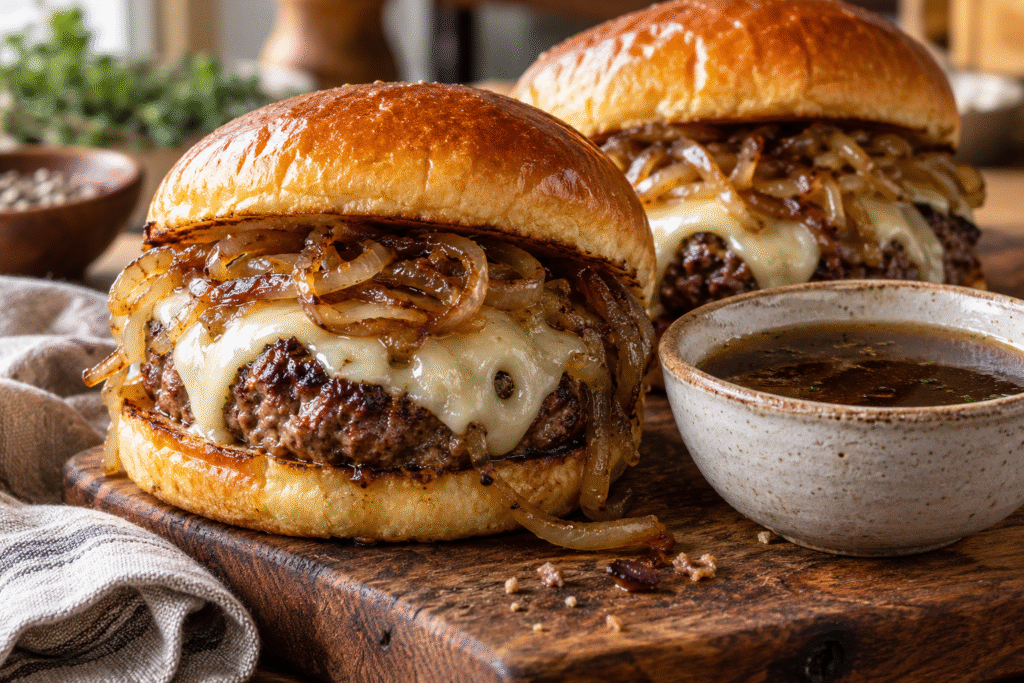
Martha Stewart French Dip Burgers are a delicious meeting point between a well-seared cheeseburger and a warm, savory dip sandwich. With a flavorful beef blend, sturdy toasted bread, restrained toppings, and carefully tended au jus, the recipe turns familiar ingredients into a deeply satisfying culinary escape.
Frequently Asked Questions
What is a French dip burger?
A French dip burger is a hamburger served with a savory beef dipping broth, usually alongside toasted bread, melted cheese, and onions. It combines the format of a burger with the dipping ritual of a French dip sandwich.
What beef is best for a French dip burger?
A moderately fatty blend works best because it stays juicy while developing a browned crust. Ground chuck, short rib, brisket, or a combination can all work when handled gently and cooked carefully.
Can I make the au jus without wine?
Yes. Use beef stock or broth to deglaze the pan instead. Scrape up the browned bits, then simmer the liquid with onions, garlic, and herbs until the flavor is pleasantly concentrated.
How do I keep a burger bun from falling apart?
Choose a sturdy roll and toast the cut sides before assembly. Serve the au jus in a separate cup and dip each bite rather than soaking the entire sandwich at once.
What cheese melts best on this burger?
Cheddar, provolone, and Swiss are all good options. The best choice depends on whether you prefer a sharper, milder, or nuttier flavor, but the cheese should be added near the end of cooking.
Can I prepare the patties ahead of time?
Yes. Shape the patties, cover them, and refrigerate them until you are ready to cook. Chilling helps them hold together, though they should not sit unrefrigerated for an extended period.
What sides go well with French dip burgers?
Fries, a crisp salad, and roasted vegetables all pair well. Choose a side that either echoes the burger’s comfort-food character or adds freshness to balance the rich beef and broth.