
Key Takeaways
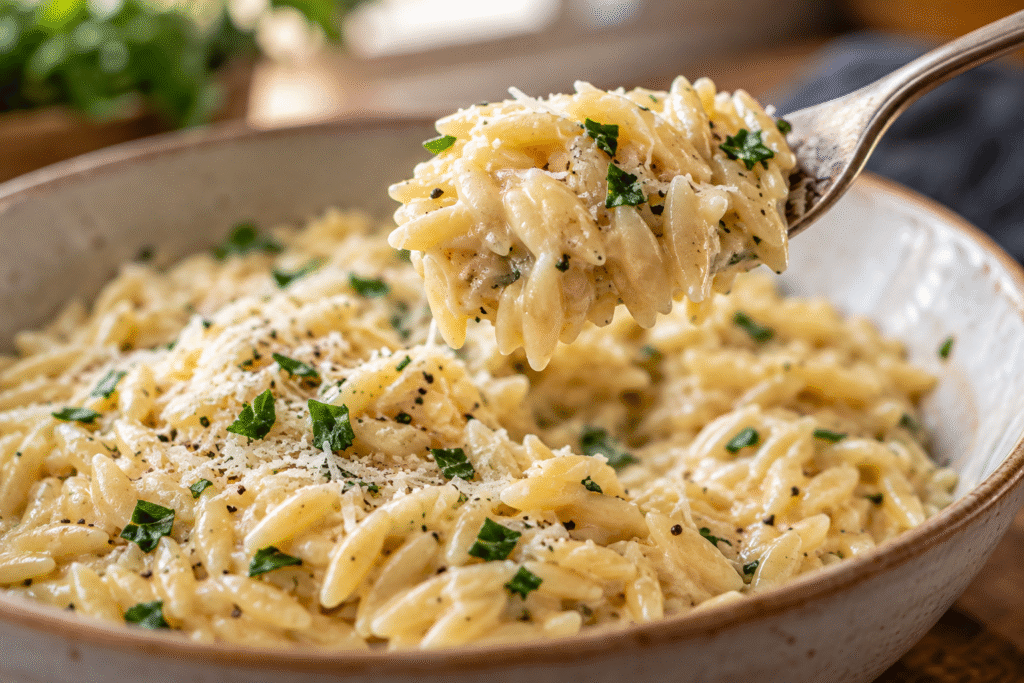
Garlic Parmesan Orzo is a cozy, flexible dish that sits somewhere between a quick pasta supper and a comforting grain bowl.
- Orzo cooks like pasta but creates a naturally creamy texture.
- Broth, garlic, butter, and Parmesan build the main flavor base.
- Gentle simmering and occasional stirring help prevent sticking.
- Fresh vegetables, herbs, seafood, or chicken can turn it into a complete meal.
- Leftovers reheat best with a splash of broth or milk.
What makes garlic Parmesan orzo creamy and flavorful
Garlic Parmesan Orzo gets its appeal from a simple meeting of textures: small pasta, savory broth, softened garlic, and salty cheese. The orzo releases some starch as it cooks, giving the pan sauce body without requiring a complicated technique. It is comforting enough for a quiet evening but polished enough for a table shared with guests.
How orzo differs from rice and other pasta
Although orzo resembles a long-grain rice at a glance, it is pasta made from wheat. That distinction matters because it can be cooked directly in a seasoned liquid, much like rice, while still developing the tender bite of pasta. It also cooks quickly and fits neatly into a spoon, making every mouthful carry plenty of sauce.
Unlike larger pasta shapes, orzo benefits from close attention near the end of cooking. There is less water around each piece in a one-pan preparation, so the pasta can move from perfectly tender to overly soft fairly quickly. Taste it before the stated cooking time is complete, especially if your pan is wide or your heat runs strong.
The role of garlic, Parmesan, and broth
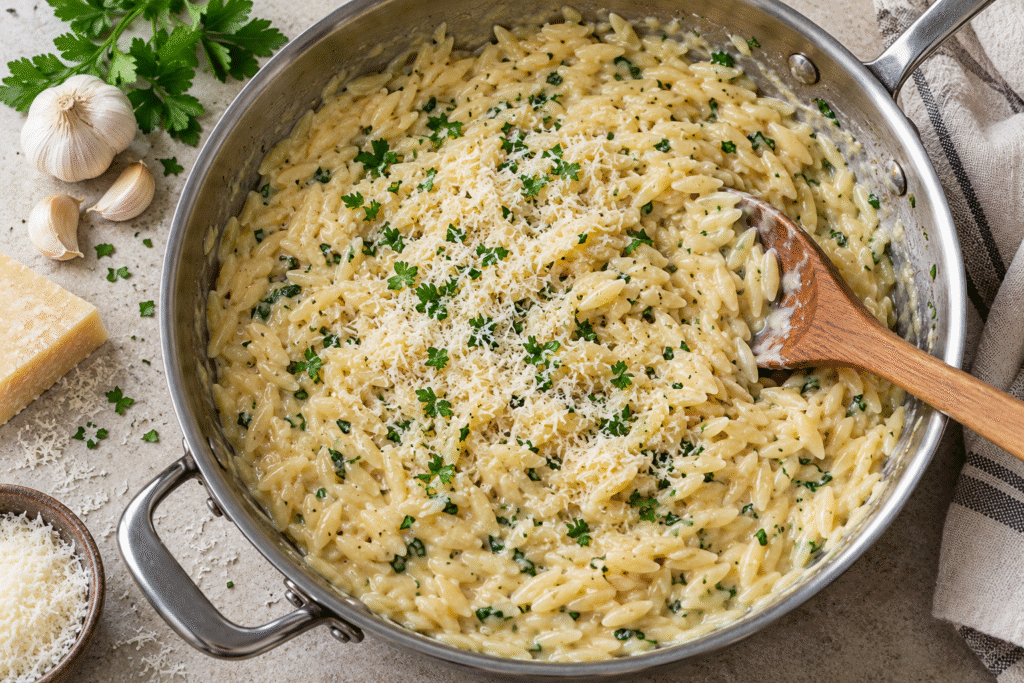
Garlic provides the aromatic foundation, but it should become fragrant rather than deeply browned. Broth gives the pasta a savory backbone as it absorbs into the grains, while Parmesan brings salt, nuttiness, and a smooth finish. Butter or olive oil helps carry those flavors through the dish.
For a gentle introduction to the style, this Garlic Parmesan Orzo Pasta approach is a useful point of comparison: the charm comes from tender orzo, garlic, Parmesan, and a light creamy sauce rather than a long ingredient list. Freshly grated Parmesan matters because it melts more evenly into the warm pasta.
Choosing between a creamy orzo and one-pot preparation
A creamy orzo can be made with a little milk or cream stirred in at the finish, while a one-pot version relies more heavily on broth and the starch released during simmering. The first tends to feel richer; the second is often lighter and keeps the ingredient list short. Both work well, so choose according to the meal and the texture you want.
If you prefer a looser side dish, reserve a little warm broth and stir it in just before serving. For a thicker, spoonable result, let the orzo rest for a few minutes off the heat so the sauce can settle around each piece.
Ingredients for garlic Parmesan orzo
The ingredient list is compact, which makes quality and timing noticeable. Start with dry orzo, a flavorful cooking liquid, and an aromatic base, then build the finish with Parmesan and a little fat. This is a good dish for using pantry staples while still leaving room for seasonal touches.

Orzo, aromatics, and cooking liquid
Use dry orzo, finely minced garlic, butter or olive oil, and broth. Chicken broth gives the deepest savory character, while vegetable broth keeps the dish vegetarian. A small onion or shallot can add sweetness, though it is not essential.
Salt should be added thoughtfully because both broth and Parmesan may already be seasoned. Black pepper, parsley, and a little lemon are useful finishing ingredients rather than foundations, so wait until the orzo is cooked before deciding how much the dish needs.
Selecting Parmesan for the smoothest sauce
A wedge of Parmesan grated just before cooking generally melts more smoothly than pre-shredded cheese. Fine shreds disappear into the hot orzo more readily, while larger curls are better saved for the top. Add the cheese after the pan leaves the heat to reduce the chance of a grainy sauce.
The table below offers a practical way to think about each ingredient’s job. It also helps when adapting the dish to what is already in your kitchen.
| Ingredient | Main role | Useful adjustment |
|---|---|---|
| Orzo | Tender pasta and natural starch | Check early for doneness |
| Garlic | Warm, savory aroma | Use less for a milder finish |
| Broth | Cooking liquid and seasoning | Choose chicken or vegetable |
| Parmesan | Salty, nutty creaminess | Grate it finely and add off heat |
| Butter or olive oil | Richness and flavor carry | Use olive oil for a lighter feel |
Once you understand those roles, substitutions become less intimidating. Keep the cooking liquid flavorful, protect the garlic from scorching, and taste before adding more salt.
Optional ingredients for extra flavor and texture
A squeeze of lemon can brighten the rich cheese, and chopped parsley adds a fresh green note. Red pepper flakes bring gentle heat, while sautéed mushrooms, peas, or spinach make the bowl feel more substantial. For crunch, toasted breadcrumbs or pine nuts can be scattered over the top just before serving.
Add delicate ingredients near the end so they keep their color and shape. Heartier additions, such as mushrooms, should be cooked before the orzo or folded in after they have browned separately.
How to make garlic Parmesan orzo
The method is straightforward, but each stage has a small purpose. Build flavor in the pan first, toast the pasta briefly, then simmer it gently until the liquid is nearly absorbed. The final cheese and butter go in at the end, when the residual heat can create a cohesive sauce.
Sautéing the garlic without burning it
Warm the butter or olive oil over medium-low heat, then add the garlic and any finely chopped shallot. Stir for about 30 seconds to a minute, just until the garlic smells sweet and fragrant. If it starts turning dark at the edges, lower the heat immediately or move the pan off the burner for a moment.
Burnt garlic spreads bitterness through the whole dish, so patience helps more than high heat. Keep the aromatics moving, and have the orzo nearby so you can continue to the next step without leaving the garlic alone in the hot pan.
Toasting the orzo for deeper flavor
Add the dry orzo to the aromatic butter and stir until the grains are lightly coated. Let them toast for a minute or two, stirring often, until they smell faintly nutty. The pasta does not need to become brown; a little color is enough to give the finished dish more depth.
Toasting also helps separate the grains before liquid is added. It is a small step, but it makes the dish taste more considered without adding another ingredient.
Simmering the pasta to a tender, creamy finish
Pour in the broth and scrape the bottom of the pan so the toasted bits dissolve into the liquid. Bring it to a gentle simmer, then reduce the heat and cook uncovered or partially covered according to how quickly the liquid is reducing. Stir every so often, especially around the edges.
Taste a piece after several minutes. The orzo should be tender with a little resistance, and the pan should still look slightly loose because the pasta continues absorbing liquid as it rests. If the broth disappears before the orzo is ready, add a small splash of warm liquid rather than turning up the heat.
Adding Parmesan and finishing touches
Take the pan off the heat before stirring in grated Parmesan and a small knob of butter. Fold gently until the cheese melts and the sauce looks glossy. Add pepper, parsley, lemon juice, or a final splash of broth to balance the texture and flavor.
Let the finished orzo stand for two or three minutes, then taste again. A last adjustment of salt or lemon can make the difference between a pleasant side dish and one that tastes bright and complete.
Tips for getting the texture right
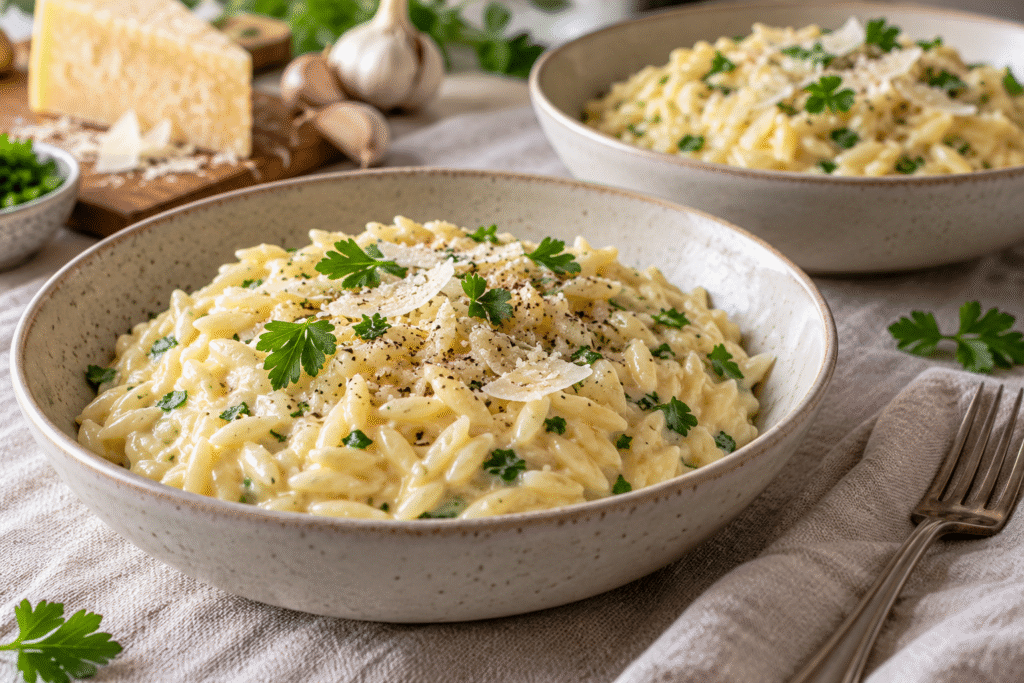
The best Garlic Parmesan Orzo is creamy but not soupy, with grains that remain distinct rather than clumping into a paste. Texture depends on the pan, the heat, the broth, and how long the orzo sits after cooking. Small corrections along the way are easier than trying to rescue an overcooked pan.
How much liquid to use
Begin with enough broth to cover the orzo generously without flooding the pan. The exact amount can vary with the pan’s width, the heat level, and whether a lid is used, so keep a little extra warm broth nearby. A wide skillet evaporates more quickly than a small saucepan.
It is safer to add liquid gradually near the end than to start with too much. Extra broth can loosen a thick sauce, but removing excess liquid may require overcooking the pasta.
When to stir and when to check for doneness
Stir every few minutes rather than constantly. Occasional movement keeps the starch from settling and helps the pasta cook evenly, while nonstop stirring can make the texture overly gluey. Check for doneness before the package timing because the orzo is cooking in a concentrated pan rather than a large pot of water.
The center should be tender, and the sauce should coat the back of a spoon. Remember that resting continues the process, so stop cooking while the mixture still looks a touch looser than your ideal serving texture.
Fixing orzo that is too thick, thin, or sticky
Texture problems are usually repairable if you respond while the dish is warm. Use these quick fixes as a guide:
- Stir in warm broth a tablespoon or two at a time when the orzo is too thick.
- Simmer uncovered briefly if the sauce is thin but the pasta is already tender.
- Fold in a little butter or milk to soften a sticky texture.
- Add lemon, herbs, or pepper if the richness feels heavy.
After each adjustment, give the orzo a short rest before changing it again. The starch needs a moment to redistribute, and repeated additions can make the final flavor muddy.
Variations on garlic Parmesan orzo
Once the basic method feels familiar, the dish becomes a flexible foundation for a full meal. Proteins can be added for substance, vegetables can bring color and freshness, and herbs can shift the flavor toward Mediterranean, rustic, or bright spring cooking. Keep the additions balanced so the Parmesan remains part of the story rather than being buried.
Adding chicken, shrimp, or salmon
Cook bite-size chicken pieces separately or in the same pan before starting the orzo, then return them near the end. Shrimp need only a short cooking time and are best added when the pasta is nearly tender. Flaked cooked salmon can be folded in after the cheese so it stays in recognizable pieces.
Season proteins simply with salt, pepper, and perhaps lemon. Since the orzo is already savory, a restrained hand keeps the complete bowl from becoming too salty.
Mixing in spinach, peas, mushrooms, or tomatoes
Tender spinach can be folded in during the final minute, while peas can warm through near the end without much preparation. Mushrooms benefit from browning first, which concentrates their flavor and keeps them from watering down the sauce. Halved cherry tomatoes can be stirred in late for acidity and color.
Use one or two additions rather than everything at once. The dish is at its best when each vegetable still has a clear texture and the sauce remains visible.
Making the recipe vegetarian or gluten-free
For a vegetarian version, choose vegetable broth and check that the Parmesan fits your dietary preferences. To make the dish gluten-free, use a certified gluten-free orzo-style pasta and follow its package directions closely, since cooking times and starch levels vary between brands.
Keep a little extra broth available when changing the pasta. Alternative shapes may absorb liquid differently, so the final texture should guide the cooking rather than a fixed minute count.
Adjusting the garlic, herbs, and cheese
Roasted garlic gives a mellow sweetness, while fresh minced garlic creates a sharper, more immediate aroma. Parsley keeps the flavor clean, thyme adds a woodsy note, and basil makes the dish feel lighter in warm weather. A small amount of Pecorino can add extra salt and edge, though it may require less additional seasoning.
Add strong ingredients gradually and taste as you go. The goal is a layered bowl where garlic and Parmesan support the pasta instead of overpowering it.
What to serve with garlic Parmesan orzo
This orzo can be a side, a vegetarian main, or the soft centerpiece of a larger spread. Its creamy texture pairs especially well with foods that bring char, crunch, acidity, or freshness. Think of the plate as a small culinary escape: one warm, comforting element balanced by something bright.
Pairing it with roasted vegetables
Roasted broccoli, asparagus, zucchini, green beans, and carrots all work well beside the pasta. Their browned edges contrast with the creamy orzo, while a squeeze of lemon over the vegetables keeps the meal from feeling too rich. A simple leafy salad can provide the same lift with less preparation.
Season the vegetables with olive oil, salt, and pepper before roasting. If the orzo is already strongly seasoned, keep the vegetables straightforward so the meal tastes unified.
Serving it alongside chicken or seafood
Garlic Parmesan Orzo makes a natural partner for roast chicken, grilled chicken thighs, seared shrimp, or baked salmon. The mild pasta catches the juices from the protein and gives the plate a satisfying base. For seafood, lemon and parsley are especially helpful finishing notes.
Serve the orzo soon after it is made when possible. If the protein needs a few extra minutes to rest, keep the pasta warm with a splash of broth rather than leaving it uncovered until it tightens.
Garnishing with herbs, lemon, and extra Parmesan
Garnishes should add contrast, not simply decoration. Scatter over chopped parsley or chives, add a fine grating of Parmesan, and finish with lemon zest or a few drops of juice. A crack of black pepper gives the pale, creamy surface a little visual and aromatic energy.
Bring garnishes to the table separately when serving guests. That lets each person adjust the brightness, saltiness, and cheesiness to suit their own plate.
Storing, reheating, and making orzo ahead
Orzo thickens as it cools because the pasta continues to absorb its surrounding sauce. That is normal, but it means leftovers need a little care to return to their original softness. Store them promptly, reheat gently, and expect to refresh the sauce before serving.
How to refrigerate leftover orzo
Let the orzo cool briefly, then transfer it to a shallow airtight container and refrigerate it. Use leftovers within a few days for the best flavor and texture. If you know you will be reheating the dish, save a little broth separately so it is ready for the next day.
Avoid leaving the pan at room temperature for an extended period. Smaller portions cool and reheat more evenly than one deep container.
Reheating without drying out the sauce
Reheat the orzo in a saucepan over low heat or in short intervals in the microwave. Add a splash of liquid before warming, cover loosely, and stir between intervals. Gentle heat is essential because high heat can make the Parmesan sauce separate and the pasta turn soft at the edges.
Warm only what you plan to eat. Repeated cooling and reheating gradually erodes the texture and makes the sauce harder to bring back together.

Refreshing the texture with broth, milk, or cream
Broth is the best all-purpose refresher because it restores moisture without adding much richness. Milk makes the result softer and creamier, while a small amount of cream creates a more luxurious finish. Add liquid a little at a time, stirring until the orzo loosens.
Taste after reheating and brighten it with lemon, pepper, or fresh herbs. A final sprinkle of Parmesan can restore some of the savory character that fades in the refrigerator.
Conclusion
Garlic Parmesan Orzo is a small-pasta dish with plenty of room for personality: toast the grains, simmer them gently, finish with good Parmesan, and adjust the texture while everything is warm. From a simple weeknight side to a bowl filled with vegetables or seafood, it rewards attention without demanding a complicated technique.
Frequently Asked Questions
Is orzo rice or pasta?
Orzo is a small rice-shaped pasta made from wheat. It cooks like other pasta, though it is often prepared in a broth-based method that resembles cooking rice.
Can garlic Parmesan orzo be made without cream?
Yes. Broth, butter, Parmesan, and the starch released by the orzo can create a creamy texture without heavy cream. Add a little extra broth at the end if the sauce becomes too thick.
How do you stop orzo from becoming sticky?
Use moderate heat, stir occasionally rather than constantly, and stop cooking when the orzo is just tender. A short rest is useful, but letting it sit too long without loosening liquid can make it clump.
What vegetables go well with garlic Parmesan orzo?
Spinach, peas, mushrooms, broccoli, asparagus, zucchini, and tomatoes are all good choices. Add delicate vegetables near the end and brown firmer vegetables separately when possible.
Can chicken be added to orzo?
Yes. Cook seasoned chicken separately or in the pan before preparing the orzo, then return it when the pasta is nearly finished so the meat stays tender.
Can garlic Parmesan orzo be frozen?
It can be frozen, but the creamy texture may change slightly after thawing. Cool it quickly, store it airtight, and refresh it slowly with broth or milk while reheating.
Why is my Parmesan sauce grainy?
The cheese may have been added over high heat, or it may not have melted evenly. Remove the pan from the heat before adding finely grated Parmesan, then stir gently with a small splash of warm liquid.