
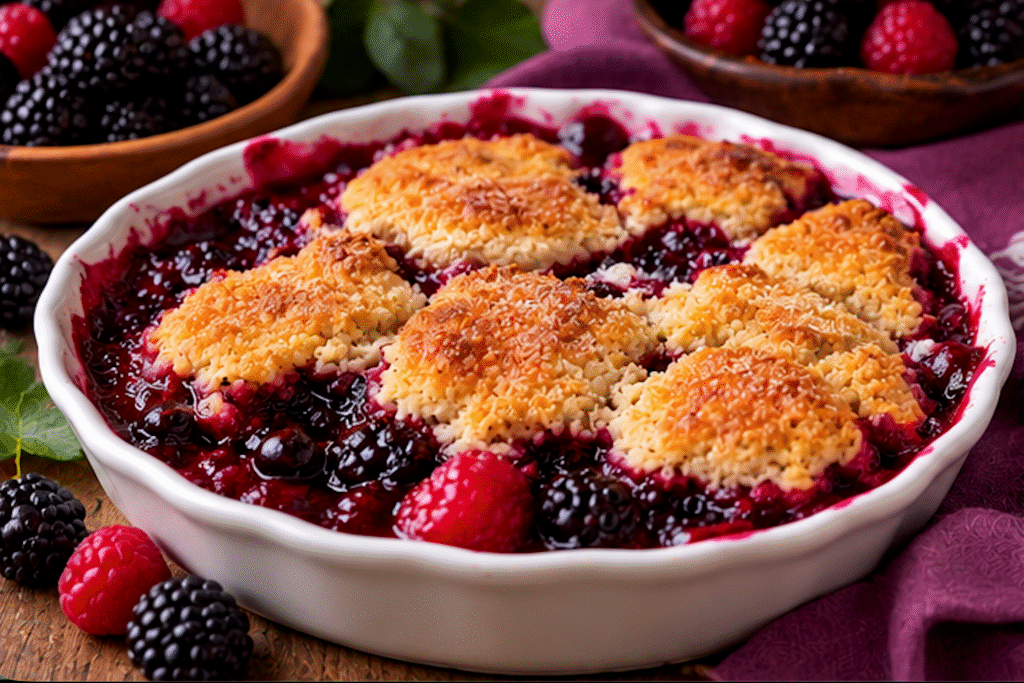
A good cobbler should taste like fruit, butter, warm spices and a topping you keep picking at every time you walk past the baking dish.
Nobody should take a bite and immediately think, “Ah yes, the dietary version.”
That is the goal here.
Making a gluten-free cobbler or turning a traditional recipe vegan doesn’t mean stripping away everything that makes the dessert worth eating. The trick is knowing which substitutions behave like the original ingredients and which require a little adjustment.
Some swaps are incredibly easy. Plant-based butter can replace dairy butter in many toppings. Others, particularly gluten-free flour, need more thought.
Let’s sort out what actually works.
Key Takeaways
- Gluten-free and vegan cobblers can have excellent texture and flavor when substitutions are chosen for what they actually do in the recipe.
- A quality 1-to-1 gluten-free flour blend is usually easier for beginners than experimenting with individual flours.
- Flax, applesauce and aquafaba can replace eggs, but they don’t behave identically.
- Plant-based butter is often the easiest dairy-free fat for a traditional cobbler topping.
- Maple syrup and coconut sugar are alternatives to white sugar, but they are still added sugars.
- When baking for someone with celiac disease or a serious food allergy, ingredient labels and cross-contact matter just as much as the recipe itself.
Inclusive Baking Should Still Taste Good
There was a time when alternative baking had a fairly miserable reputation.
Remove the wheat, eggs or dairy and you were supposedly expected to accept a dry, dense dessert because at least you could eat it.
Thankfully, we’ve moved on.
Fruit cobbler is particularly easy to adapt because the fruit already provides moisture, flavor and natural sweetness. Unlike some cakes and breads, cobbler doesn’t depend on a complicated structure to succeed.
That gives us room to experiment.
The important thing is understanding why an ingredient is in the recipe before replacing it.
Flour provides structure.
Butter provides fat, flavor and tenderness.
Eggs can provide binding, moisture and lift.
Sugar sweetens, but it also affects browning and texture.
Replace an ingredient without replacing its job and things can go sideways quickly.
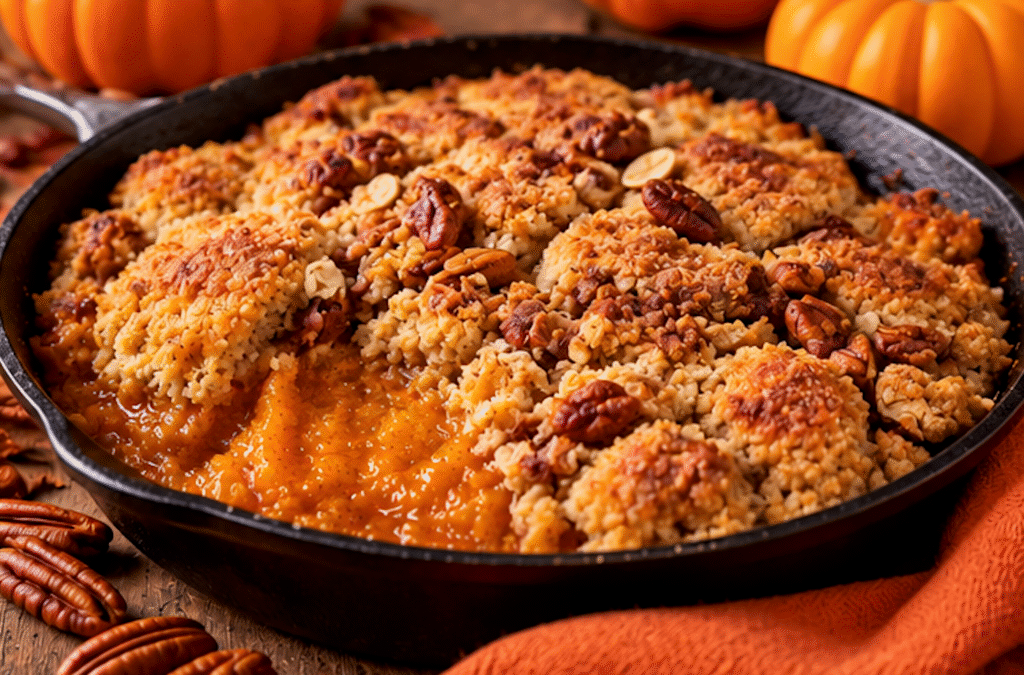
Choosing the Right Gluten-Free Flour
Walk into the baking aisle and you’ll find almond flour, coconut flour, rice flour, oat flour and bags containing combinations of ingredients you’ve probably never heard of.
You don’t need all of them.
For a first attempt, a commercial gluten-free flour blend designed as a 1-to-1 replacement for wheat flour is usually the easiest option.
These blends commonly combine several ingredients to mimic some of the properties normally provided by wheat flour.
That matters because individual gluten-free flours behave very differently.
Almond Flour
Almond flour adds richness and a slightly nutty flavor.
It works particularly well in crumb toppings, where you aren’t asking the flour to create the same structure as a biscuit.
It also contains more fat than regular wheat flour, so blindly replacing wheat flour cup for cup can change the finished texture.
Rice Flour
Rice flour has a fairly neutral flavor and appears in many commercial gluten-free blends.
On its own, however, it can produce a slightly gritty texture.
Combining it with starches and other gluten-free flours generally produces better results.
Coconut Flour
This one deserves caution.
Coconut flour absorbs a lot of liquid.
It is not a straightforward cup-for-cup substitute for wheat flour.
If a standard topping calls for one cup of all-purpose flour, replacing it with one cup of coconut flour can leave you wondering whether you accidentally baked construction material.
Use recipes specifically formulated for coconut flour rather than improvising the substitution.
Do You Need Xanthan Gum?
Sometimes.
Xanthan gum helps provide some of the binding and elasticity missing when gluten is removed.
Many commercial 1-to-1 gluten-free flour blends already contain xanthan gum or another binder.
Check the ingredient list before adding more.
If your blend already contains it, additional xanthan gum may produce a gummy topping rather than improving the texture.
For a simple crumble topping, you may not need it at all.
For biscuit-style toppings that need more structure, a properly formulated gluten-free flour blend makes life much easier.
Easy Egg-Free Binding Options
Many traditional cobblers don’t actually require eggs.
That’s convenient.
If your favorite recipe does use them, however, there are several alternatives.
Flax Egg
Mix one tablespoon of ground flaxseed with roughly three tablespoons of water.
Let it stand for about 10 minutes.
The mixture thickens into a gel that can help bind ingredients together.
Flax works particularly well in rustic baked desserts because a few visible flax specks aren’t exactly going to ruin the presentation.
Applesauce
Unsweetened applesauce adds moisture and some binding ability.
It works best in softer, cake-style toppings.
Start with approximately 1/4 cup of applesauce for one egg in recipes where eggs aren’t providing significant structure.
Just remember that applesauce adds moisture.
If your topping is already wet, you’ll need to account for that.
Aquafaba
Aquafaba is the liquid from cooked chickpeas, including the liquid you’ll find in a can of chickpeas.
It can replace eggs in certain baking applications and can even be whipped.
For cobbler, I’d consider it more useful in lighter cake-style toppings than in a basic biscuit topping.
And no, your apple cobbler won’t suddenly taste like hummus.
Dairy-Free Fats That Actually Work
Replacing butter sounds simple until you remember how much butter contributes to baking.
It isn’t just there for flavor.
Cold solid fat helps create texture.
That makes plant-based butter one of the easiest substitutions when you want a familiar cobbler topping.
Plant-Based Butter
Use a product intended for baking rather than a very soft spread designed primarily for toast.
For biscuit and crumble toppings, keep it cold before cutting it into your dry ingredients.
The technique remains almost identical to traditional butter.
Coconut Oil
Coconut oil can work, particularly in crumble toppings.
Use refined coconut oil if you don’t want a noticeable coconut flavor.
Because its melting characteristics differ from butter, the finished topping may be slightly different.
That isn’t necessarily worse.
Just different.
Plant-Based Milk
Unsweetened oat, soy and almond beverages can all work in cobbler toppings.
Choose an unsweetened variety unless you deliberately want the additional sugar.
Also check flavored products.
Vanilla oat milk might be perfectly nice in an apple cobbler. It is less helpful when you’re trying to control the sweetness yourself.
What About Natural Sweeteners?
Here’s where food marketing can make things unnecessarily confusing.
Maple syrup and coconut sugar may sound more wholesome than regular white sugar, but they’re still added sugars. Harvard’s Nutrition Source specifically includes maple syrup, coconut sugar and honey among forms of added sugar.
That doesn’t mean you can’t use them.
It simply means changing the type of sugar doesn’t automatically transform cobbler into health food.
Maple Syrup
Maple syrup works beautifully with apples, pears, pumpkin and pecans.
Because it is liquid, replacing a large quantity of granulated sugar with maple syrup can change the moisture balance of a topping.
It is easier to use in the fruit filling, where extra liquid is simpler to manage.
Coconut Sugar
Coconut sugar can usually be incorporated more easily into crumb toppings because it behaves more like granulated sugar.
Its darker flavor works particularly well with cinnamon, apples and pears.
Monk Fruit Sweeteners
Monk fruit is dramatically sweeter than sugar, so it isn’t a simple one-for-one replacement unless you’re using a formulated baking blend. Harvard notes that monk fruit extract can be roughly 100 to 250 times sweeter than sugar.
Follow the manufacturer’s baking conversion rather than guessing.
And one important point for vegan baking.
Honey isn’t vegan, so maple syrup is the better swap when you want a liquid sweetener.

Turning Classic Cobbler Recipes Into Dietary-Friendly Versions
Once you understand the substitutions, converting a traditional recipe becomes much easier.
You don’t have to reinvent the entire dessert.
Change only what needs changing.
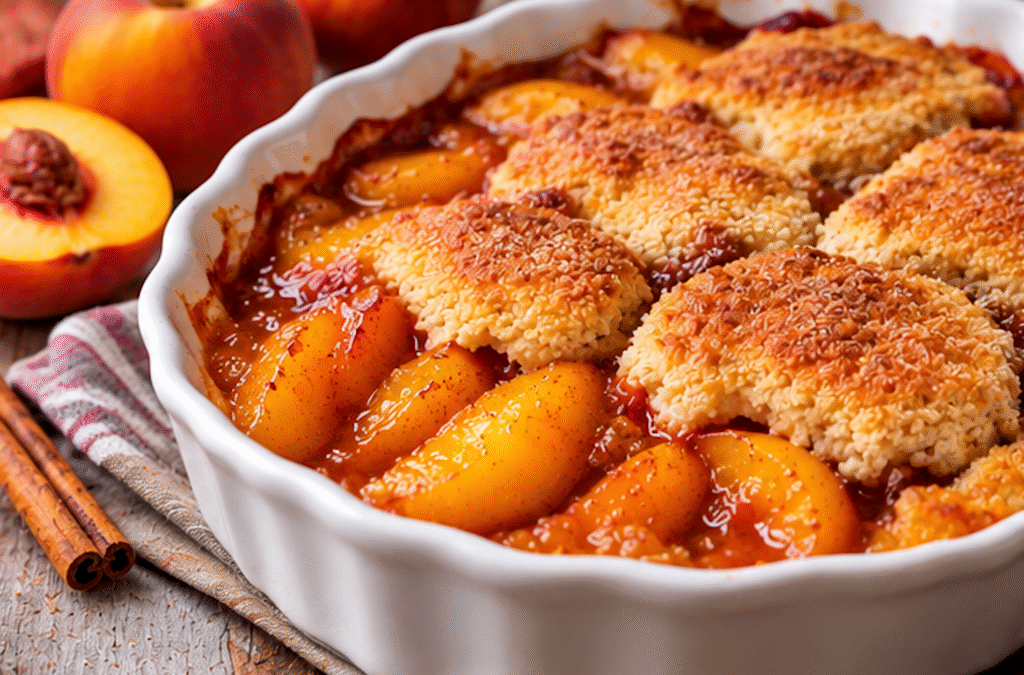
Gluten-Free Vegan Spiced Peach Cobbler
For the filling
- 6 cups sliced peaches
- 1/3 to 1/2 cup coconut or brown sugar
- 2 tablespoons cornstarch
- 1 tablespoon lemon juice
- 1 teaspoon vanilla
- 1/2 teaspoon cinnamon
- Pinch of nutmeg
For the topping
- 1 1/2 cups 1-to-1 gluten-free baking flour
- 1/4 cup sugar
- 2 teaspoons gluten-free baking powder
- 1/2 teaspoon salt
- 6 tablespoons cold plant-based butter
- About 2/3 cup unsweetened plant-based milk
Heat the oven to 375°F.
Combine the filling ingredients and place them in a lightly greased baking dish.
Mix the dry topping ingredients. Cut in the cold plant-based butter until you have coarse crumbs.
Gradually add the plant milk until a soft biscuit dough forms.
Spoon the dough over the peaches.
Bake for approximately 35 to 45 minutes, until the topping is browned and the fruit is bubbling.
Let it rest before serving.
That last part matters more than it seems. The fruit filling continues thickening as it cools.
Lower-Sugar Apple Cranberry Cobbler
Apples already contain plenty of natural sweetness.
That means you don’t necessarily need to bury them under sugar.
Try
- 5 cups sliced apples
- 1 cup cranberries
- 1/4 cup maple syrup
- 2 tablespoons cornstarch
- 1 teaspoon cinnamon
- 1/4 teaspoon nutmeg
- 1 tablespoon lemon juice
Taste the apples before deciding whether more sweetness is necessary.
Very tart apples may need more.
Naturally sweet apples may need less.
This is one of the easiest ways to reduce added sugar without relying entirely on alternative sweeteners.
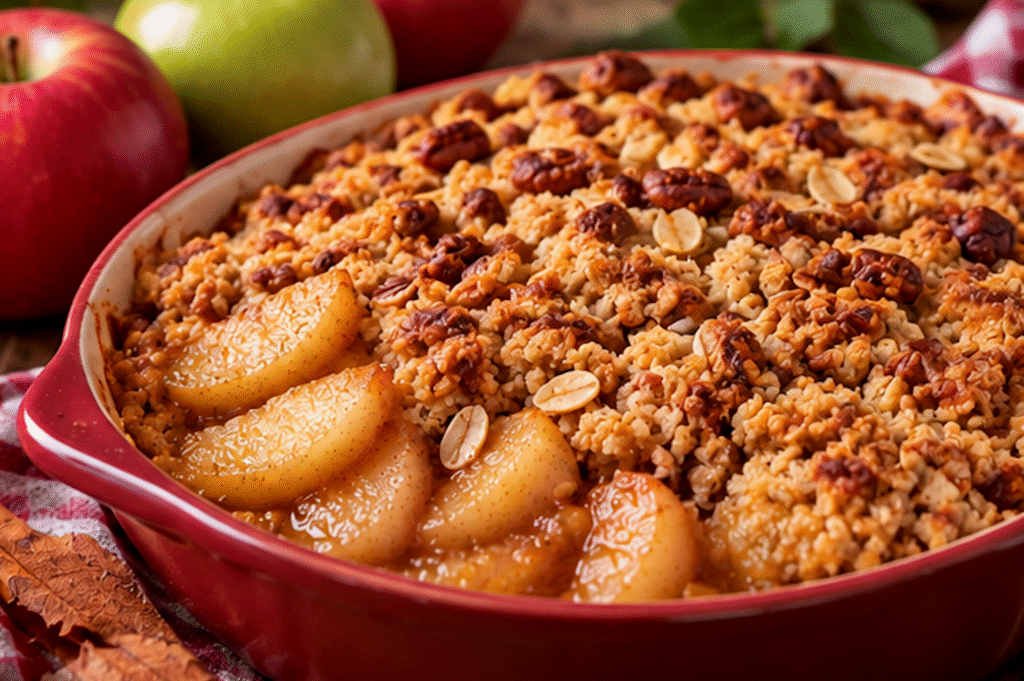
Dairy-Free Pumpkin Apple Cobbler
Pumpkin works best when paired with fruit rather than treated as the entire filling.
Combine
- 4 cups diced apples
- 1 cup pumpkin puree
- 1/3 cup maple syrup
- 1 teaspoon cinnamon
- 1/2 teaspoon ginger
- Pinch of nutmeg
- 2 tablespoons cornstarch
Top it with a dairy-free oat crumble made from gluten-free oats, gluten-free flour, brown or coconut sugar and plant-based butter.
You get pumpkin flavor without turning the whole thing into pumpkin pie filling.
Five Fall Cobbler Combinations Worth Trying
You don’t need five completely different recipes.
Start with one reliable fruit-to-topping ratio and change the flavors.
Apple Cranberry
Difficulty
Easy
Best feature
Sweet and tart balance
Best topping
Oat crumble
Try cinnamon and a little orange zest.
Peach Pecan
Difficulty
Easy
Best feature
Juicy fruit with crunchy pecans
Best topping
Gluten-free biscuit topping
Vanilla and cinnamon are enough. Don’t bury ripe peaches under six different spices.
Pear Blackberry
Difficulty
Easy
Best feature
Soft pear against tart berries
Best topping
Almond flour crumble
Cardamom works beautifully here.
Pumpkin Apple
Difficulty
Moderate
Best feature
Classic fall flavor without becoming overly heavy
Best topping
Oat crumble
Ginger, cinnamon and nutmeg all work.
Cherry Pear
Difficulty
Easy
Best feature
Naturally balanced sweetness and acidity
Best topping
Gluten-free biscuit or crumble topping
A little vanilla is often all it needs.
Fixing a Soggy Cobbler
Alternative ingredients get blamed for every texture problem.
Sometimes the real culprit is simply too much liquid.
Frozen berries, peaches and cherries can release substantial amounts of juice.
If your fruit is extremely wet, account for that before baking.
Use enough cornstarch or another suitable thickener and give the finished cobbler time to rest.
Also avoid sealing a freshly baked cobbler while it is still hot.
Trapped steam lands right back on your topping.
There goes the crunch.
Fixing a Dense Gluten-Free Topping
If your topping could double as a hockey puck, several things may have happened.
You may have used too much flour.
You may have overmixed the dough.
Your baking powder may be old.
Or your flour substitution may simply have been inappropriate for the recipe.
This is why 1-to-1 baking blends are useful for beginners.
They remove some of the guesswork.
Mix biscuit dough only until everything comes together.
Rustic is good.
Perfectly smooth biscuit dough usually means you’ve worked it more than necessary.
Restoring a Crisp Topping
Yesterday’s cobbler rarely has the same topping texture.
The fruit keeps releasing moisture and the topping absorbs it.
Use the oven rather than the microwave when crispness matters.
Warm the cobbler uncovered until heated through.
The microwave is quicker, but steam tends to soften the topping.
For one late-night serving when nobody is watching?
Microwave away.
Read the Ingredient Label
If you’re baking for preference, you have some flexibility.
If you’re baking for someone who must avoid gluten for medical reasons or has a serious food allergy, you need to be much more careful.
In the United States, foods carrying a gluten-free claim must meet FDA requirements, including having less than 20 parts per million of unavoidable gluten.
That doesn’t mean every naturally gluten-free ingredient will necessarily display the words “gluten-free.”
It also doesn’t mean “wheat-free” automatically equals gluten-free.
The Celiac Disease Foundation specifically warns that wheat-free foods can still contain other gluten sources such as rye or barley.
When it matters, read the whole ingredient list.
Watch for Cross-Contact
This is the part home bakers sometimes overlook.
You can buy every correct ingredient and still introduce gluten through the kitchen.
Shared cutting boards, flour sifters, containers and utensils are among the potential sources of cross-contact identified by the Celiac Disease Foundation.
If you’re baking for someone with celiac disease, take that seriously.
Clean preparation surfaces.
Use clean equipment.
Be careful with open containers that may previously have been used while baking with wheat flour.
Oats deserve particular attention. If gluten avoidance is medically necessary, use oats specifically labeled gluten-free.
For more detailed guidance, these three resources are worth keeping handy.
FDA Gluten-Free Food Labeling Guidance
Celiac Disease Foundation Guide to Sources of Gluten
Harvard Nutrition Source Guide to Added Sugar
Comparing Common Cobbler Swaps
Exact nutrition depends on the brand, recipe and portion size, so broad claims such as “vegan cobbler has fewer calories” aren’t particularly useful.
Sometimes it does.
Sometimes it doesn’t.
Plant-based butter is still a concentrated source of fat. Almond flour can contain more calories than wheat flour. Maple syrup is still added sugar.
A better way to choose substitutions is to decide what you’re actually trying to accomplish.
| Your Goal | Swap to Consider | What to Know |
|---|---|---|
| Remove gluten | 1-to-1 gluten-free flour | Easiest starting point for traditional toppings |
| Remove dairy | Plant-based baking butter | Usually closest to traditional texture |
| Remove eggs | Flax egg | Good binding option for rustic baking |
| Reduce added sugar | Use naturally sweet fruit and less added sugar | Often easier than replacing all sugar |
| Add fiber | Gluten-free oats, fruit, flax | Works especially well in crumble toppings |
| Add richness | Almond flour | Excellent in crumb toppings |
| Vegan baking | Plant milk and plant-based butter | Check individual product labels |
| Lower sweetness | Reduce sugar gradually | Lets the fruit remain the main flavor |
“Healthier” isn’t one universal measurement.
For one person, it means less added sugar.
For another, it means avoiding dairy.
For someone with celiac disease, preventing gluten exposure matters far more than shaving a few calories from dessert.
Frequently Asked Questions
Will gluten-free cobbler taste different?
It can, depending on the flour.
A well-formulated gluten-free flour blend can produce a topping remarkably close to one made with wheat flour. Almond, coconut and other single flours create more noticeable differences.
Can I use almond flour instead of regular flour?
Yes in some toppings, but it isn’t a universal one-to-one replacement.
Almond flour is particularly good for crumble toppings. For biscuits, use a recipe specifically designed for almond flour or a formulated gluten-free baking blend.
Can I make cobbler both gluten-free and vegan?
Absolutely.
Use gluten-free flour and verify that other ingredients are gluten-free. Replace dairy butter with plant-based baking butter and dairy milk with an unsweetened plant beverage.
Many cobbler recipes don’t require eggs in the first place.
Do I need xanthan gum?
Not always.
Check your flour blend. Many 1-to-1 gluten-free baking flours already contain a binder.
Is maple syrup healthier than sugar?
Maple syrup has a different flavor and nutritional profile, but it is still classified as added sugar. Use it because you enjoy what it contributes to the recipe rather than assuming it gives dessert a free nutritional pass.
Can I use coconut flour in cobbler?
Yes, but use a recipe developed specifically for it.
Coconut flour absorbs much more liquid than wheat flour, making direct substitutions unreliable.
Are oats gluten-free?
Oats themselves don’t contain the same gluten found in wheat, rye and barley, but cross-contact during growing and processing can be an issue. If gluten avoidance is medically necessary, choose oats labeled gluten-free.
Does vegan automatically mean healthy?
No.
A dessert can contain no animal products and still be high in added sugar or calories.
Vegan describes the ingredients being used. It isn’t a nutritional rating.
Bake for the People at Your Table
Dietary substitutions work best when you stop thinking about what you’re removing and start thinking about what each new ingredient contributes.
Maybe almond flour adds nuttiness.
Maybe maple syrup tastes better with pears.
Maybe plant-based butter gives you almost exactly the biscuit topping you wanted without dairy.
And sometimes the simplest change is the best one.
Start with good fall fruit. Keep the ingredient list manageable. Use substitutions that make sense for the job they’re being asked to do.
A good vegan cobbler recipe shouldn’t need an apology before you serve it.
Neither should a gluten-free cobbler.
Put it on the table, hand everyone a spoon and let the dessert do the talking.