
Key Takeaways
A gentle stovetop method turns familiar ingredients into a creamy holiday drink without raw eggs. Keep the heat low, chill the finished batch, and adjust it to suit your table.
- Cook the yolk-and-milk mixture to 160°F, stirring constantly.
- Use whole milk and cream for a rich, pourable base.
- Add vanilla and optional spirits after cooking.
- Expect the eggnog to thicken as it chills; thin it before serving if needed.
- Refrigerate it covered and serve it cold with nutmeg.
Key ingredients and proportions
A homemade eggnog recipe without raw eggs starts with a cooked custard: egg yolks, milk, and cream gently warmed together. The quantities below make a rich batch that is easy to pour, with room to adjust the spice or sweetness to your taste. Chefworx brings recipes and cooking tips together for curious home cooks, and this simple base is a good place to begin.
Choose egg yolks for a rich, creamy base
Egg yolks give the drink its familiar custard body and golden color. Separate six eggs, saving the whites for another use; the whites do not go into this version. Whisk the yolks well with the sugar before adding any warm liquid so the mixture starts out smooth.
Balance whole milk and cream
Whole milk keeps the eggnog fluid enough to pour, while heavy cream lends a softer, fuller texture. For a batch of about six servings, start with three cups of whole milk and one cup of cream. If you prefer a lighter drink, you can replace some cream with milk, though the result will feel less rich.
Add sugar, spices, and vanilla
A little nutmeg and cinnamon bring warmth without covering up the dairy and egg flavors. This proportion guide keeps the ingredients in view while you gather everything; vanilla goes in after the custard cooks.
| Ingredient | Amount | Purpose |
|---|---|---|
| Egg yolks | 6 | Give the custard body |
| Whole milk | 3 cups | Form the pourable base |
| Heavy cream | 1 cup | Add richness |
| Sugar | ⅔ cup | Sweeten the custard |
| Ground nutmeg | ½ teaspoon | Add warm spice |
| Ground cinnamon | ¼ teaspoon | Round out the flavor |
These amounts create a balanced starting point rather than a rigid formula. Add vanilla at the end, then taste the chilled eggnog before deciding whether it needs another pinch of spice.
Gather a saucepan and food thermometer
Use a medium, heavy-bottomed saucepan so the milk heats evenly, plus a whisk and a reliable food thermometer. A fine-mesh strainer is helpful for catching any small bits of cooked egg, and a bowl set over ice will speed cooling later. For a little more background on a cooked-yolk approach, see this cooked-yolk method.
Cook the custard safely
Gentle heat is the key to an eggnog that tastes smooth rather than scrambled. First warm the milk and cream, then gradually whisk that liquid into the yolks before returning everything to the saucepan. Chefworx covers cooking tips as part of its wider culinary learning, and this method rewards the same patient attention you would give any delicate custard.
Whisk the yolks and sugar until smooth
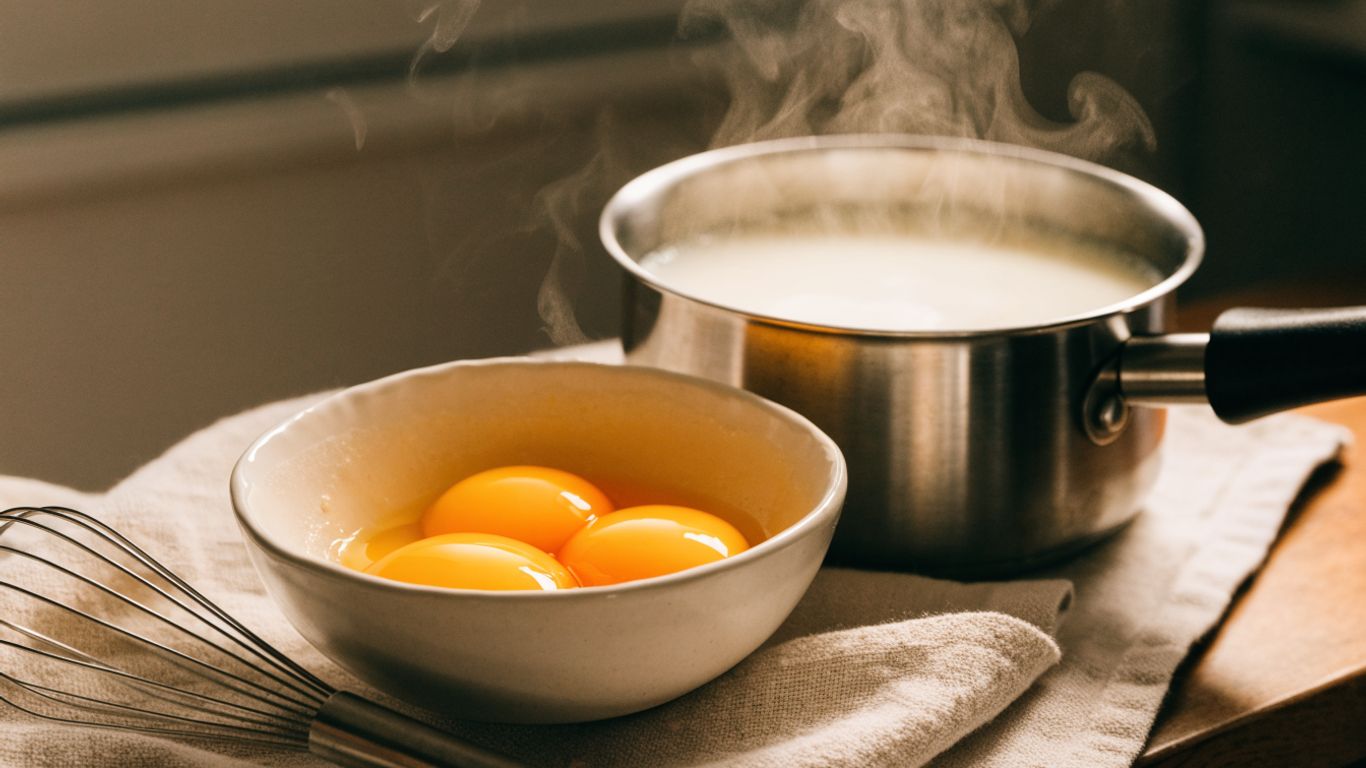
In a heat-safe bowl, whisk the six yolks with the sugar until the mixture looks even and slightly paler. Break up any thick streaks of yolk along the sides of the bowl. This first step helps the sugar disperse and makes it easier to blend in the warm milk later.
Temper the yolks gradually with warm milk
Warm the milk and cream in the saucepan until steaming, but not boiling. To temper the yolks, whisk in a small splash of the warm dairy at a time; rushing this step can cook the eggs before they have a chance to blend. A measured sequence keeps the process calm and helps the custard stay smooth:
- Whisk a small ladleful of warm milk into the yolks.
- Add another ladleful while whisking continuously.
- Slowly pour the tempered yolk mixture back into the saucepan.
Once combined, stir thoroughly so the mixture is even from the bottom of the pan to the edges. The slow addition is what protects the yolks as they meet the heat.
Heat the mixture to 160°F, stirring constantly
Return the saucepan to low or medium-low heat and stir steadily, reaching into the corners of the pan. Check the temperature with a food thermometer, taking care not to let its tip rest against the bottom. Bring the custard to 160°F, then remove it from the heat; keep stirring until you do.
Prevent curdling with gentle, even heat
A custard can turn grainy if it gets too hot or sits unstirred against the pan. Keep the burner moderate and move the whisk or a heatproof spatula across the bottom and around the sides. If the temperature rises too quickly, lift the pan off the heat briefly, continue stirring, and then return it to the burner.
Finish and customize the eggnog
Once the custard reaches temperature, a few small finishing choices shape the final drink. Straining improves the texture, while vanilla and any optional spirits are best added after cooking. Taste as you go; a restrained hand lets the nutmeg, cream, and custard remain distinct.
Strain the custard for a silky texture

Set a fine-mesh strainer over a clean bowl and pour the hot custard through it. This catches any tiny cooked bits and makes the drink especially smooth. Don’t press solids through the mesh; let the liquid pass naturally, then discard anything left behind.
Stir in vanilla after cooking
Add one teaspoon of vanilla once the custard is off the heat and stir it in well. Adding it at this point keeps its aroma bright and recognizable. If you like a more pronounced vanilla note, taste the cooled mixture before adding a little more.
Add bourbon, rum, or brandy if desired
For an adults-only batch, stir in bourbon, rum, or brandy after the custard has been cooked. Start with a modest splash, taste, and add more only if you like the result. Chefworx also explores food and wine topics, but here the simplest guide is your own palate: the spirit should complement the spice rather than overwhelm it.
Adjust the consistency with extra milk
The custard may feel thicker than expected, especially after cooling. Whisk in cold milk a tablespoon at a time until it pours the way you like. Go gradually, since a small splash can make a noticeable difference in a creamy batch.
Get the texture and flavor right
Eggnog changes as it rests: the custard settles, the spices mingle, and the cold makes the drink feel thicker. That is normal, and it is easy to adjust before serving. A taste after chilling gives you a better sense of the finished sweetness and spice than tasting it warm.
Expect the eggnog to thicken as it chills
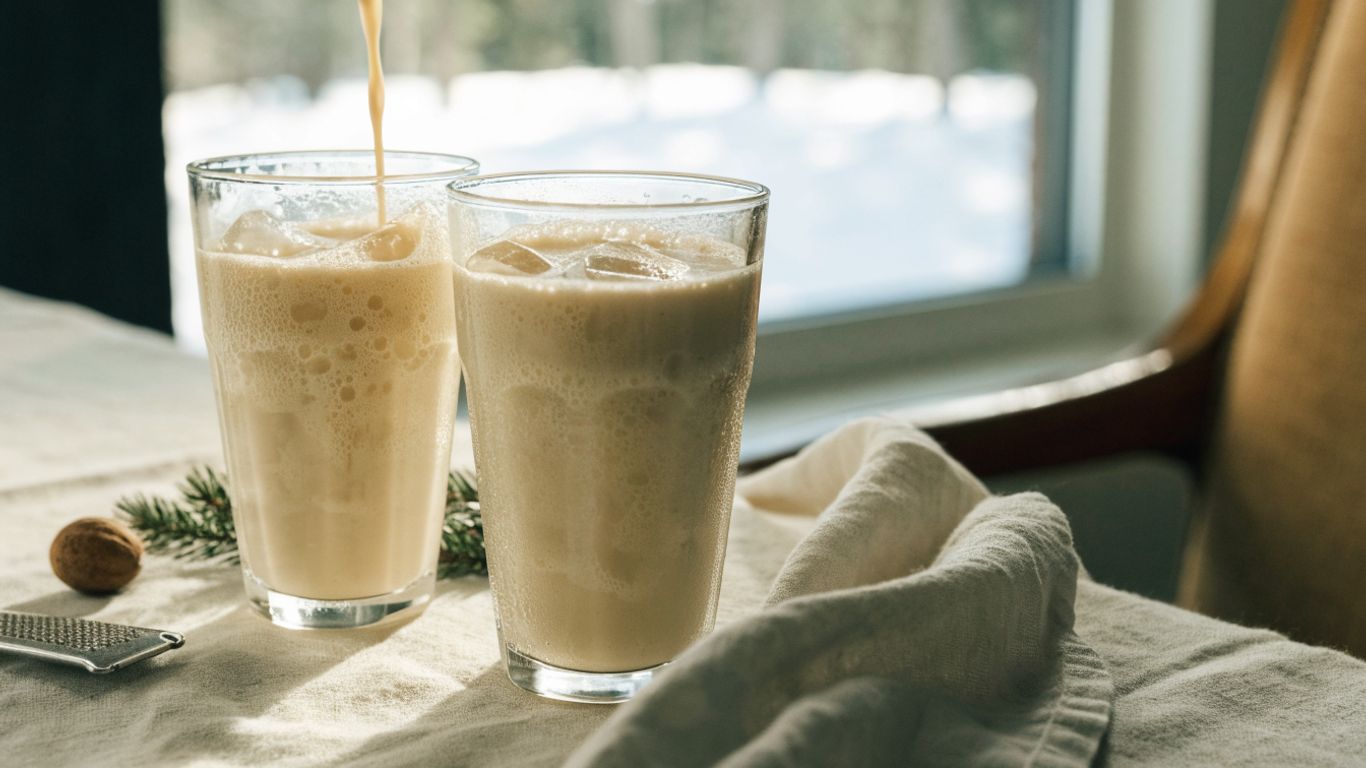
The yolks continue to lend body as the mixture cools, so the eggnog may be thicker the next day than it was in the saucepan. Let it chill fully before judging the texture. A thicker consistency can be lovely in a small glass, but it should still pour without needing to be spooned.
Thin an overly thick batch before serving
If the chilled drink is too dense, whisk in cold milk a little at a time. Pause to check the texture after each addition, then stop when it pours easily. This is also a handy way to soften a batch that feels especially rich after a long chill.
Smooth out small lumps with a blender
If a few small lumps remain after straining, use an immersion blender for a brief blend, keeping its head submerged to avoid splashing. A countertop blender works too, but blend in batches and let hot liquid cool first. For a chilled batch, a few short pulses should be enough to smooth the texture without whipping in too much air.
Adjust sweetness and spice to taste
Taste a small glass once the eggnog is cold, then add sweetness or spice in modest increments. A little more nutmeg can make the flavor feel warmer; extra sugar may be best dissolved separately in a spoonful of warm milk before it is whisked in. Small adjustments preserve the balance of the whole batch.
Make substitutions for different needs
The method is flexible, though changing the ingredients can change the drink’s richness and texture. Keep the gentle cooking and steady stirring even when you make substitutions. Chefworx brings together recipe content and culinary learning, including the practical ways small choices can shape a dish.
Use dairy-free milk and cream alternatives
You can try an unsweetened, creamy plant-based milk and a dairy-free cream alternative in place of the milk and cream. Choose products that suit your taste, since their sweetness and thickness vary. The egg yolks still need to be cooked carefully, and the finished texture may be different from a dairy version.
Reduce the sugar gradually without changing the method
For a less-sweet batch, reduce the sugar a little rather than removing it all at once. The cooking steps stay the same: whisk the yolks with sugar, temper with warm dairy, and heat while stirring to 160°F. Taste the cold eggnog before making a final adjustment.
Leave out the alcohol for a family-friendly version
The spirits are optional, so simply leave them out for a nonalcoholic batch. The cooked custard is flavorful on its own, especially with vanilla and nutmeg. If you are serving a group, it is easy to offer a bottle of spirits separately so adults can add their own.
Choose freshly grated or ground nutmeg
Freshly grated nutmeg gives a vivid aroma, while ground nutmeg is convenient and blends easily into the custard. Either works; start with the amount in the ingredient guide and adjust after chilling. A light dusting on each glass adds fragrance without making the drink taste too strongly spiced.
Chill, store, and serve
Cooling the eggnog promptly and keeping it refrigerated helps preserve its fresh, custardy flavor. Pour it into a covered container once it has cooled, then give it enough time in the refrigerator to become thoroughly cold. When serving, a quick whisk brings the texture back together.
Cool the eggnog promptly before refrigerating
Transfer the strained custard to a clean bowl and set it over an ice bath, stirring occasionally until it is no longer hot. Then pour it into a covered container and refrigerate. Cooling it promptly avoids leaving the finished custard at room temperature for an extended stretch.
Store it covered in the refrigerator for three to four days
Keep the container covered in the refrigerator and use the eggnog within three to four days. If it has been left out for an extended period, or its appearance or smell seems off, discard it rather than tasting it. A clean, sealed container helps protect the delicate dairy flavor from absorbing other refrigerator aromas.
Shake or whisk it before pouring
A little settling is normal, particularly after the drink has sat overnight. Shake a tightly closed container gently or whisk the eggnog in a pitcher until it looks even again. If it has thickened more than you like, loosen it with a splash of cold milk before pouring.
Serve chilled with a dusting of nutmeg
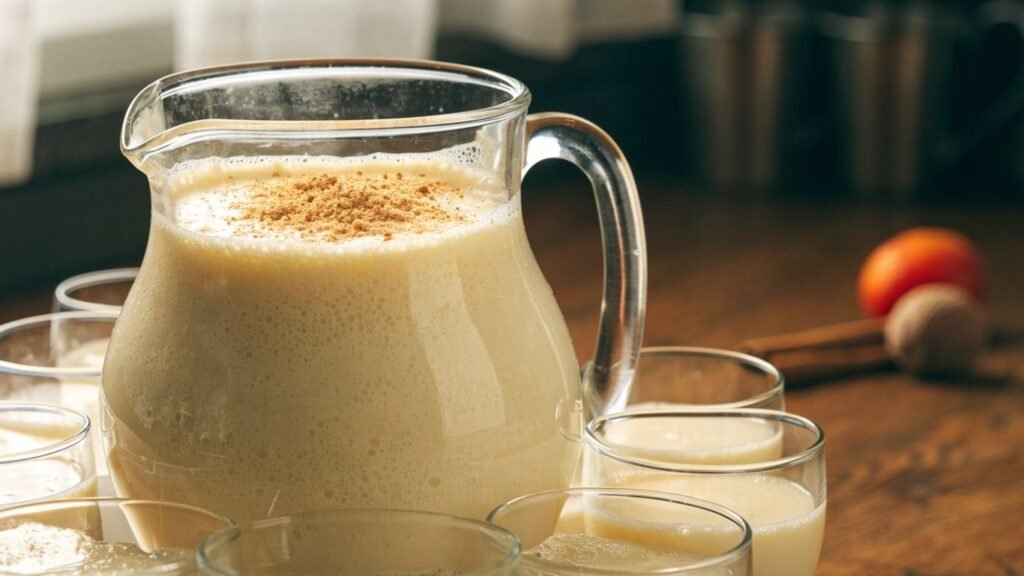
Pour the eggnog into small chilled glasses and finish each serving with a little nutmeg. It is rich, so modest portions are satisfying; offer extra milk on the side for guests who prefer a lighter pour. The best finishing touch is the one that suits your table, whether that means a plain glass or a small splash of spirit.
Conclusion
With a thermometer, gentle heat, and a little patience, homemade eggnog can be creamy, warmly spiced, and made without raw eggs. Chill it well, adjust the texture to your liking, and share it in small glasses with a final dusting of nutmeg.
Frequently Asked Questions
Does this eggnog recipe use raw eggs?
No. The yolks are cooked in the milk and cream mixture until the custard reaches 160°F, and the egg whites are not used.
How do I know when the custard is ready?
Use a food thermometer to check that the mixture reaches 160°F while you stir constantly. Remove the pan from the heat once it reaches that temperature.
Can I make eggnog without alcohol?
Yes. The spirits are optional, and the cooked custard tastes good without them. Add vanilla and spices for flavor, and serve any spirits separately if desired.
Why is my eggnog thicker after chilling?
The yolks give the custard body, and the mixture can feel thicker once it is cold. Whisk in cold milk a little at a time until it reaches a pourable consistency.
Can I use a different kind of milk?
You can try a creamy, unsweetened plant-based milk and a dairy-free cream alternative. Expect some change in flavor and texture, and keep the same gentle cooking method.
How long does homemade eggnog keep?
Keep it covered in the refrigerator and use it within three to four days. Discard it if it has been left out for an extended period or seems off in appearance or smell.
Can I make the eggnog ahead of time?
Yes. Prepare and chill it ahead, then whisk it before serving. Taste it cold and adjust the thickness with milk if needed.