
Key Takeaways
Fresh tomatoes, a gently cooked aromatic base, and a little patience make a satisfying soup with room to adjust as you go.
- Choose ripe tomatoes that smell fragrant and feel heavy for their size.
- Cook onion and garlic gently before adding tomatoes, broth, and herbs.
- Peel tomatoes for a smoother finish, or leave the skins on for convenience.
- Blend carefully, then balance the soup with salt, herbs, and optional cream.
- Refrigerate leftovers promptly or freeze them for another meal.
Ingredients for fresh tomato soup
A good pot of tomato soup starts with ripe tomatoes and a few everyday ingredients that support rather than hide their flavor. This homemade tomato soup recipe with fresh tomatoes is flexible: use the broth and herbs you have, then adjust the seasoning once the soup is blended. For another simple take on the dish, browse this fresh tomato soup recipe.
Choosing ripe tomatoes for the best flavor
Use about 2½ pounds of ripe tomatoes, washed and chopped. They should smell sweet and tomatoey, feel heavy for their size, and give slightly when pressed; a mix of varieties is perfectly fine. If the tomatoes are very juicy, the soup may need a little more simmering to reach the texture you like.
Different tomatoes bring slightly different qualities to the pot, so this quick guide can help you choose what to use.

| Tomato type | Flavor and texture | How it works in soup |
|---|---|---|
| Beefsteak | Juicy, mild, and meaty | Makes a full-bodied base |
| Roma | Dense and less watery | Helps create a thicker soup |
| Cherry | Sweet and concentrated | Adds a bright, sweet note |
| Heirloom | Varies by variety | Brings distinctive, layered flavor |
You can combine whatever is ripe and available. Ripe, fragrant tomatoes are the most useful starting point; the exact variety matters less than their freshness and flavor.
Building a savory base with onion and garlic
For a balanced pot, set aside one medium yellow onion, finely chopped, and three garlic cloves, minced. Warm two tablespoons of olive oil in a heavy pot, then cook the onion until soft and translucent before adding the garlic. This gives the aromatics time to turn sweet and mellow, without letting the garlic brown or become bitter.
Picking herbs, broth, and optional cream
Use about three cups of vegetable or chicken broth, adding more later if you prefer a lighter soup. A few sprigs of fresh thyme or a teaspoon of dried thyme pair well with tomatoes; fresh basil is lovely stirred in at the end. Keep cream optional, and have salt and black pepper ready so you can season the soup after cooking, when the flavors have come together.
How to prepare fresh tomatoes
Preparing tomatoes takes only a few minutes, and there is no need to make every piece look perfect. Rinse them well, remove the stems, and decide whether you want a completely smooth soup or a more rustic one. The choice to peel is mostly about texture, so let the meal you have in mind guide you.
Washing and removing stems
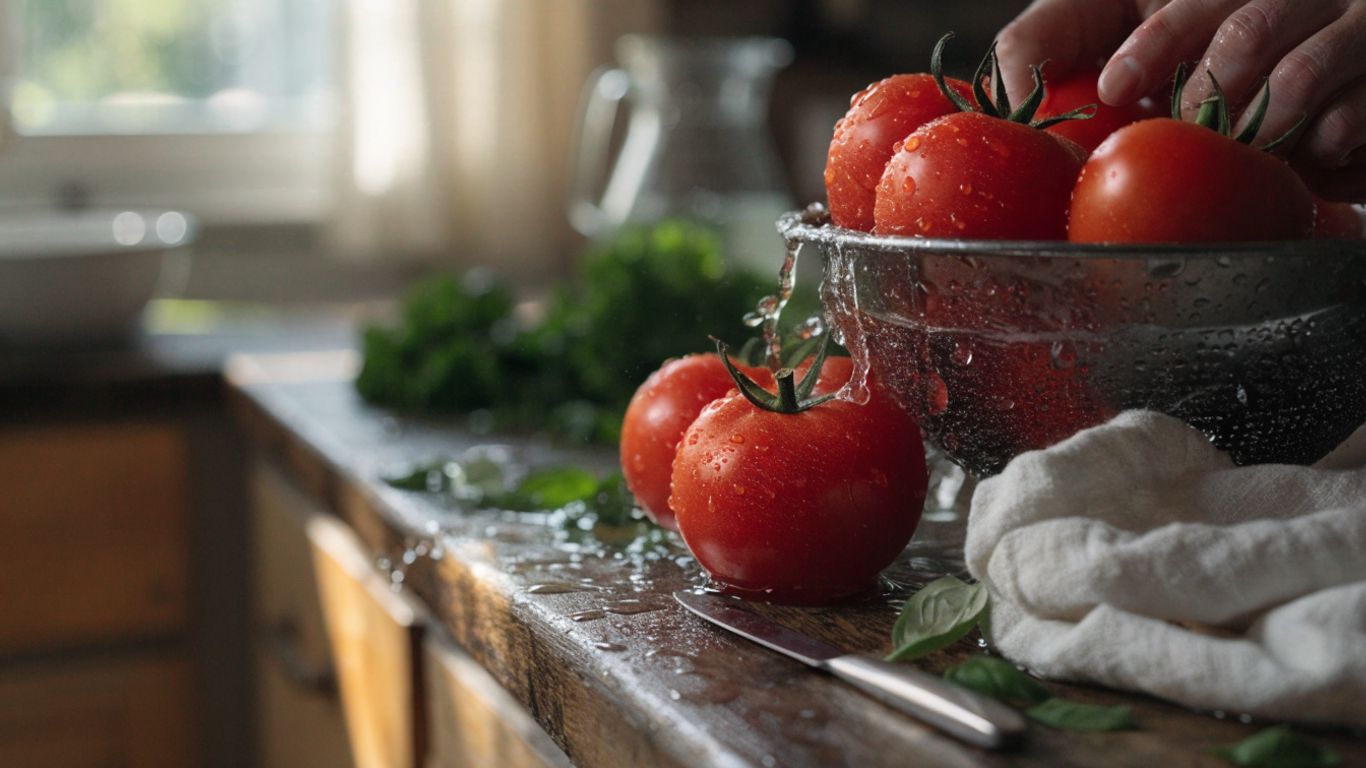
Rinse the tomatoes under cool running water and gently rub away any dirt, especially around the stem ends. Pat them dry with a clean towel, then cut out the tough stem cores with a small knife. If a tomato has a bruised or damaged patch, trim that part away before chopping.
Peeling tomatoes or leaving the skins on
Tomato skins soften as they cook, and an immersion blender can break them into small pieces. Leaving the skins on is quick and gives the finished soup a slightly more rustic texture. For a silkier result, peel the tomatoes first; score a shallow X on each tomato, dip it briefly in boiling water, then transfer it to cold water so the loosened skin is easier to remove.
There is no need to peel every tomato if you are short on time. A thorough blend and, if desired, a pass through a fine-mesh strainer can smooth out the soup later.
Chopping tomatoes for even cooking
Cut the tomatoes into roughly similar chunks so they soften at about the same rate. Small tomatoes can be halved or quartered; larger ones can be cut into one-inch pieces. Keep their juices on the cutting board and add them to the pot, too, since they carry plenty of flavor.
How to cook the soup
Once the tomatoes are ready, the cooking is mostly hands-off. Use a pot large enough to hold the vegetables and broth without crowding, and keep the heat moderate so the onion softens instead of scorching. A gentle simmer gives the tomatoes time to break down and lets the herbs season the broth.
Sautéing aromatics until tender
Set a large pot over medium heat and warm the olive oil. Add the chopped onion with a pinch of salt and cook for about five to seven minutes, stirring now and then, until tender. Stir in the garlic and cook for another 30 seconds, just until fragrant; if it starts to brown, lower the heat.
Simmering tomatoes with broth and herbs
Add the chopped tomatoes and their juices, the broth, thyme, and a few grinds of black pepper. Bring the mixture to a gentle boil, then lower the heat and let it simmer uncovered. This simple sequence helps the tomatoes soften while the liquid reduces slightly.
- Stir the pot once the tomatoes begin to release their juices.
- Keep the heat low enough for gentle bubbles rather than a hard boil.
- Simmer for about 20 to 30 minutes, stirring occasionally.
- Add a splash of broth if the bottom begins to look dry.
When the tomatoes collapse easily against the side of the pot, the base is ready to blend. The exact time depends on how ripe and firm the tomatoes were, so use their tenderness as your guide.
Checking for doneness and adjusting the cooking time
Test a piece of tomato with the back of a spoon: it should crush with little effort, and the onion should be tender throughout. If the pieces still seem firm, simmer for another five minutes and check again. If the soup tastes thin or watery, leave it uncovered a little longer; if it has reduced too much, stir in broth a few tablespoons at a time.
How to blend and season the soup
Blending is where the soup takes on its final character, from a loose, rustic bowl to a smooth, creamy one. Let the pot stop bubbling vigorously before you begin, and work with care around hot liquid. Blend first, then taste and season; the tomato flavor can change noticeably once the pieces and broth are combined.
Choosing an immersion blender or countertop blender
An immersion blender lets you blend the soup directly in the pot, which is convenient and avoids transferring hot liquid. Keep its head submerged to reduce splashes, and move it slowly through the soup until the texture looks even. If using a countertop blender, work in batches, fill the jar only partway, and vent the lid according to the blender’s instructions so steam can escape safely.
Getting a smooth or slightly chunky texture
For a smooth soup, blend in short bursts until no large pieces remain; strain it afterward if you want an especially fine finish. For a slightly chunky bowl, blend only part of the soup, or pulse briefly and stop while some soft tomato pieces remain. Either approach works—the best texture is the one you enjoy eating.
Balancing acidity, sweetness, salt, and herbs
Taste a spoonful after blending, then make small changes rather than trying to fix everything at once. Salt can bring out the tomatoes’ natural flavor, while a pinch of sugar may help if the soup tastes sharply acidic. A little more fresh basil or black pepper can lift the finish, and a small splash of cream can soften the edges without masking the tomatoes.
Ways to customize the recipe
The basic soup is a starting point, not a strict formula. Once the tomatoes are tender, you can take the flavor in a creamier, more herb-forward, or heartier direction without changing the method. Make one adjustment at a time and taste as you go, especially when adding ingredients that bring their own salt or sweetness.
Making the soup creamy without overpowering the tomatoes
Stir in cream a little at a time after blending, tasting between additions; a few tablespoons may be enough to round out the soup. For a dairy-free option, a spoonful of unsweetened coconut milk or a splash of olive oil can lend a softer feel, though each will change the flavor slightly. Keep the addition modest if you want the fresh tomatoes to remain the main event.
Adding roasted vegetables or extra herbs
Roasted red pepper or carrot can add sweetness and another layer of flavor. Roast them until tender, then blend them into the soup, starting with a small amount so they do not overwhelm the tomatoes. Fresh basil, parsley, or thyme can be added near the end; delicate herbs tend to taste brighter when they are not simmered for too long.
Adjusting the recipe for a thinner or thicker soup
For a thinner soup, add warm broth gradually until it reaches the consistency you like. To thicken it, simmer uncovered for a few extra minutes or blend in a small amount of cooked carrot. Avoid adding a large amount of liquid all at once: it is easy to loosen the soup later, but reducing it again takes time.

Serving and storing homemade tomato soup
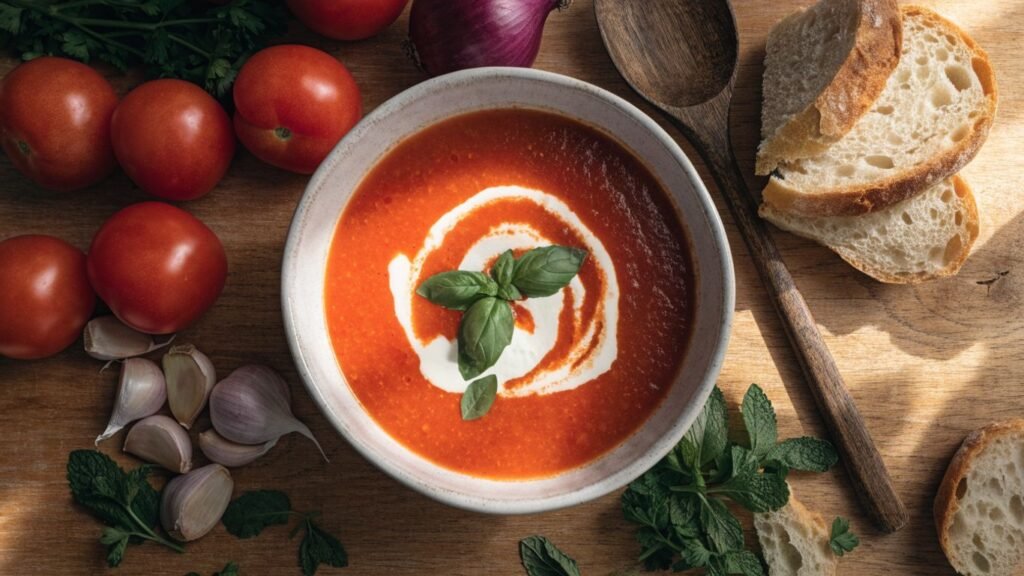
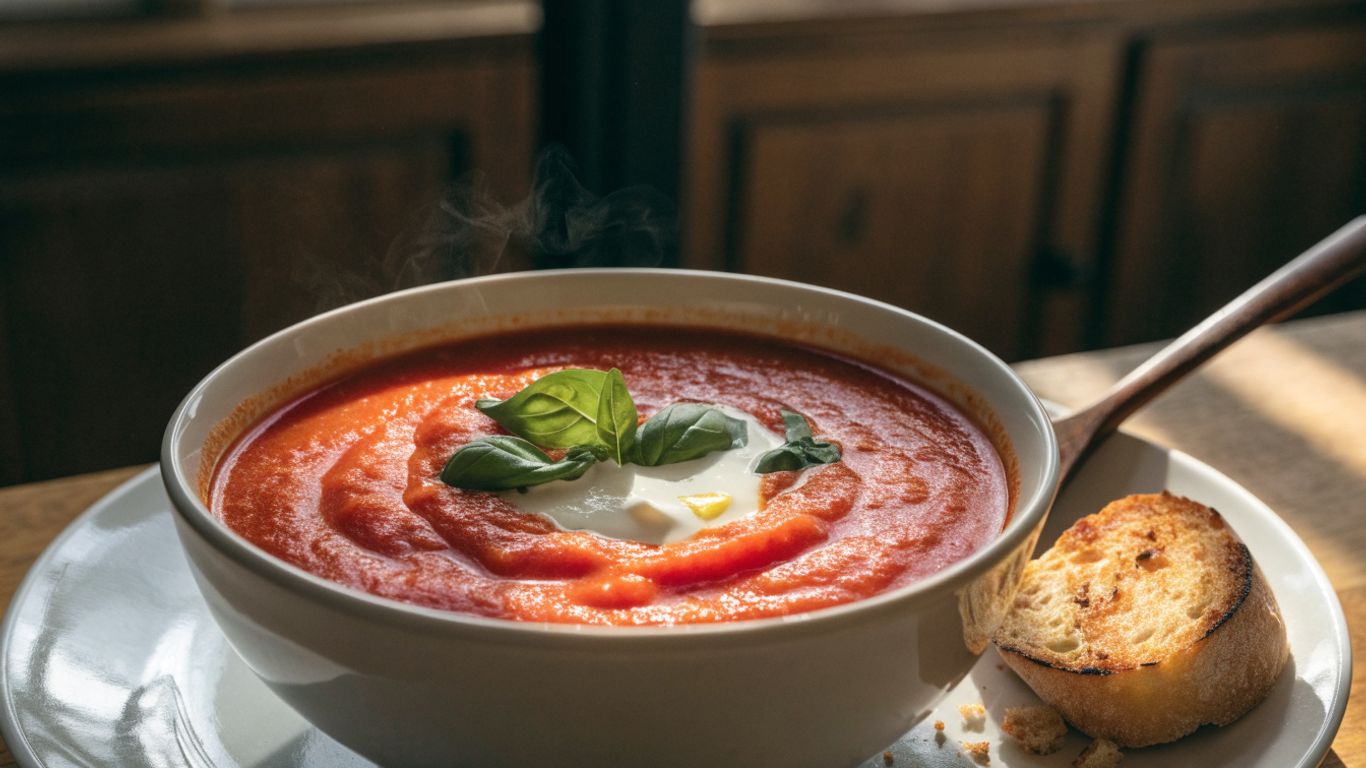
Serve the soup hot, with a little fresh herb or a swirl of cream if you like. It is easy to make ahead, too, which makes a pot of homemade tomato soup useful for a relaxed lunch or a simple supper. Cool and store leftovers promptly, and reheat only the portion you plan to eat.
Pairing the soup with bread, grilled cheese, or toppings
A slice of crusty bread is a natural companion, while grilled cheese turns the bowl into a cozy meal. For a lighter topping, try chopped basil, cracked black pepper, grated cheese, or a drizzle of olive oil. Keep toppings simple so they add contrast without covering up the soup’s fresh tomato flavor.
Refrigerating leftovers safely
Transfer leftover soup to a shallow, covered container and refrigerate it within two hours of cooking. Use it within three to four days, and reheat it on the stove or in the microwave until steaming hot, stirring as needed for even warming. If you added cream, stir the soup gently as it reheats to help it come back together.
Freezing and reheating without losing flavor
Cool the soup before freezing it in airtight, freezer-safe containers, leaving a little room at the top for expansion. For the best texture, freeze the soup before adding cream, then stir in the cream after reheating if you want it. Thaw overnight in the refrigerator when possible, or reheat from frozen over low heat with occasional stirring; add a splash of broth if it has thickened.
Conclusion
Fresh tomato soup is a forgiving dish that rewards ripe produce, gentle cooking, and a final taste before serving. Keep it smooth or leave it rustic, adjust the herbs and cream to suit your table, and save a portion for another comforting meal.
Frequently Asked Questions
Do I need to peel tomatoes for homemade tomato soup?
No. The skins soften during cooking and can be blended into the soup, though peeling them first or straining the finished soup gives a smoother texture.
What kind of fresh tomatoes are best for soup?
Use ripe, flavorful tomatoes. Meaty varieties make a thicker base, while juicier tomatoes may need a little extra simmering; combining types works well, too.
How do I make tomato soup less acidic?
Taste the soup after blending and add a small pinch of sugar if it tastes sharply acidic. A little cream can also soften the flavor, but add it gradually.
Can I make fresh tomato soup without cream?
Yes. Cream is optional, and the soup is flavorful without it. A drizzle of olive oil or a spoonful of unsweetened coconut milk can add a softer texture if desired.
How long should fresh tomato soup simmer?
Simmer it for about 20 to 30 minutes, or until the tomato pieces crush easily and the onion is tender. Firmer tomatoes may need a little more time.
How long does homemade tomato soup keep in the refrigerator?
Store it in a covered container and use it within three to four days. Refrigerate the soup within two hours of cooking and reheat the portion you plan to serve until steaming hot.
Can I freeze tomato soup?
Yes. Cool it and freeze it in airtight containers, leaving space for expansion. For a smoother result, add cream after thawing and reheating rather than before freezing.